
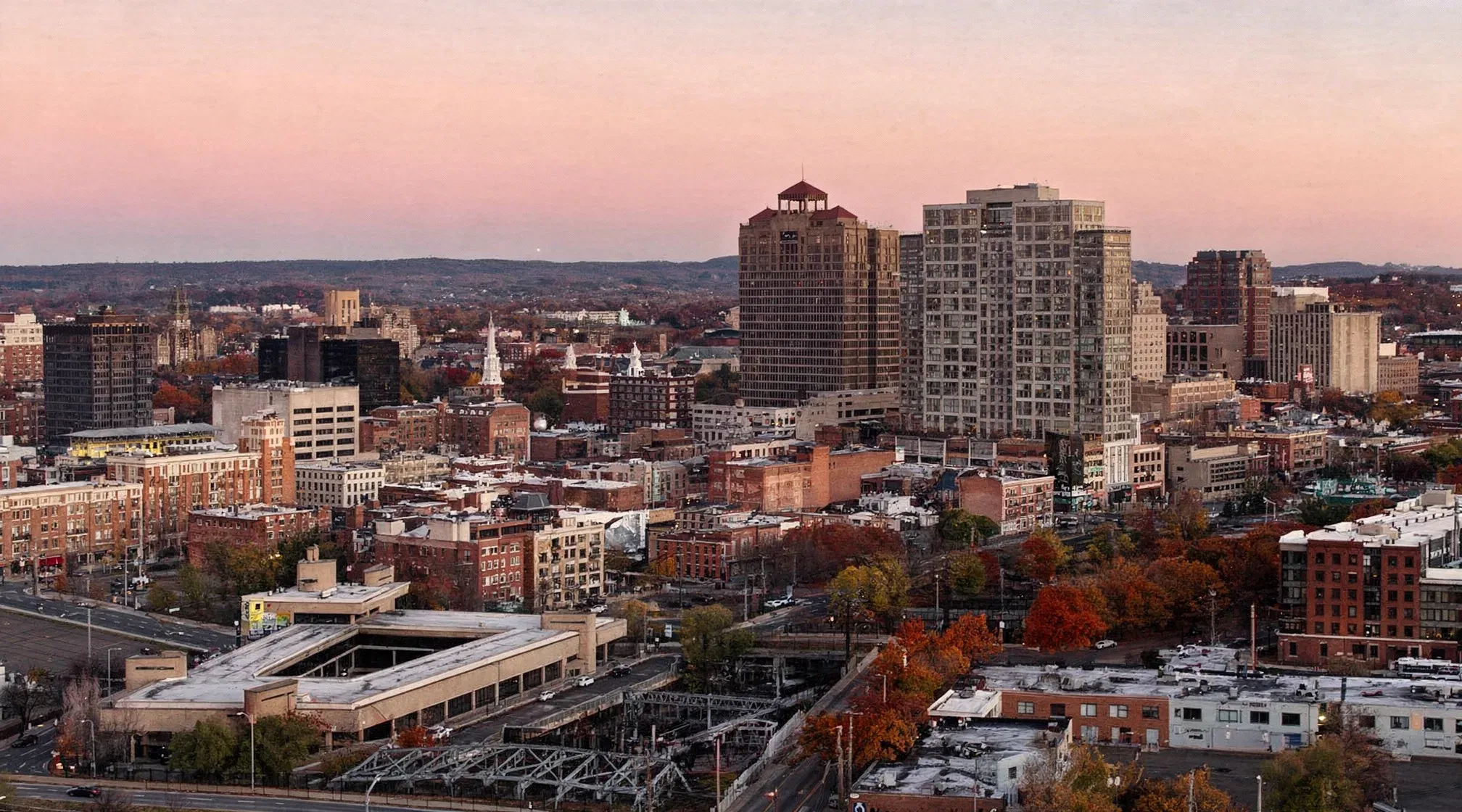
Commercial Drywall Contractor in New Haven, CT
On the commercial side we are a self-performing metal-stud and drywall sub built for the way Greater New Haven actually builds: hospital and outpatient renovations under ICRA, life-science fit-outs in the College Street corridor, rated demising walls, and lead-lined imaging rooms. We run on the GC's schedule, coordinate our own framing, firestop, and cover inspections with the AHJ, and carry CT registration with a COI on request and bonding where required. From a single rated partition to a full clinical floor, the specialty assemblies and the base framing come from one crew.
Call (203) 987-4891Commercial capabilities
- Self-performed metal stud framing and commercial drywall, the full interior wall-and-ceiling package
- UL-listed fire-rated assemblies and firestopping built to the published listing, documented for the AHJ
- ICRA infection-control containment for occupied healthcare construction (hard barriers, anteroom, negative air, HEPA)
- Abuse-, impact-, and moisture-resistant board (ASTM C1629) specified per the wall-type schedule
- Lead-lined radiation shielding for imaging rooms, installed to a physicist's report
- Cleanroom-adjacent and high-flatness (Level 5) wall assemblies for life-science fit-outs
- Suspended acoustic ceilings with code-compliant fixture and sprinkler integration
- CT-registered, COI on request, bonded where required, set up for the GC sub roster and facility credentialing
Settings we build for
We work across Greater New Haven's commercial building stock: the medical district and outpatient suites, the College Street and Science Park life-science corridor, and the multi-family stock that turns over on the city's lease calendar. The settings below cover what we are built to prove out, from clinical containment to repeatable apartment turnovers.
-
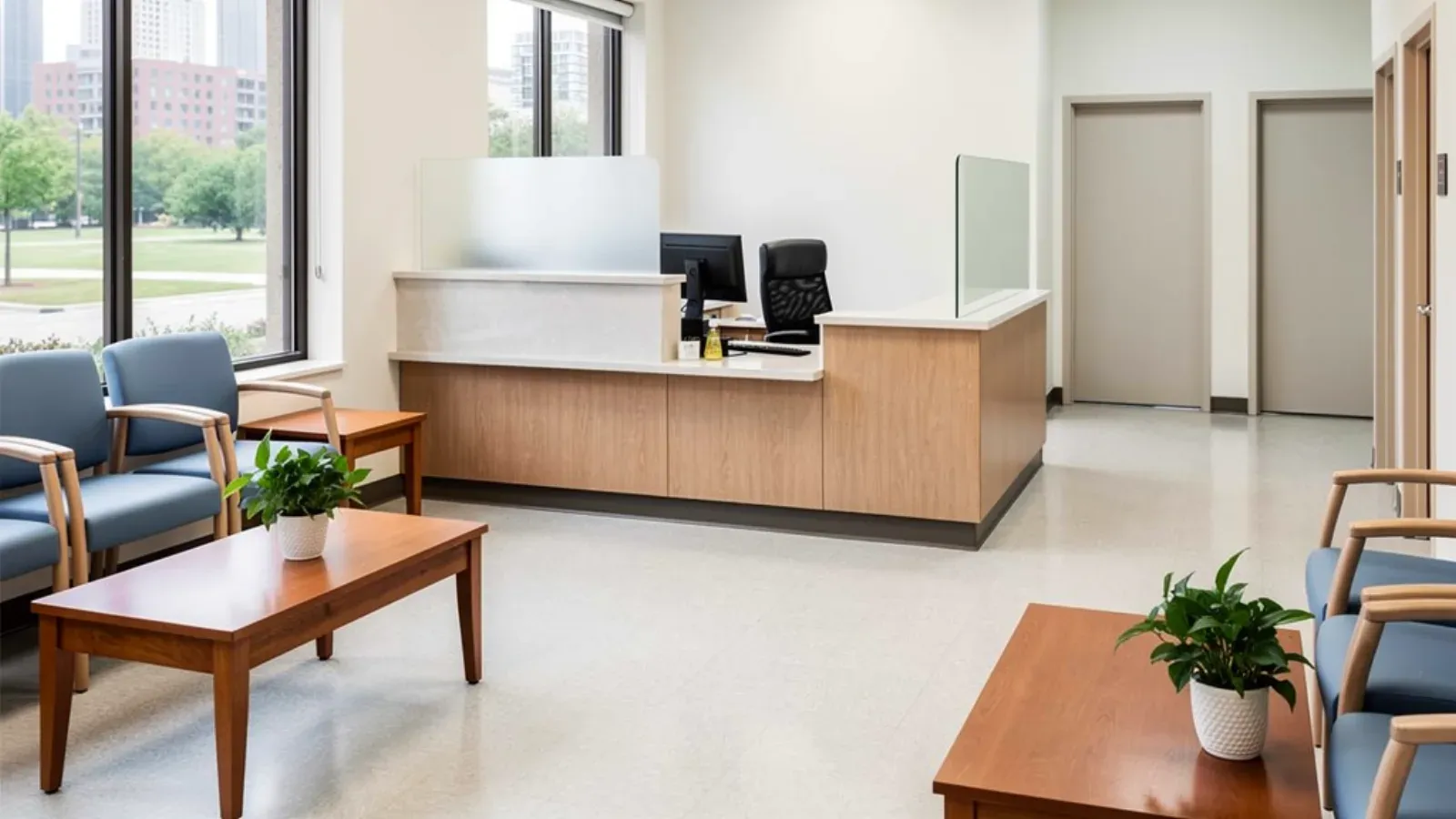
Medical & Healthcare Office Drywall
Renovating exam rooms, imaging suites, or a dental office around live patient care is not office drywall with different paint. We run the ICRA containment an occupied floor requires, put abuse-resistant, moisture-resistant, and lead-lined board where the clinical drawings call for it, and phase the work so the practice keeps running. Built to healthcare standards, documented for the facility.
-
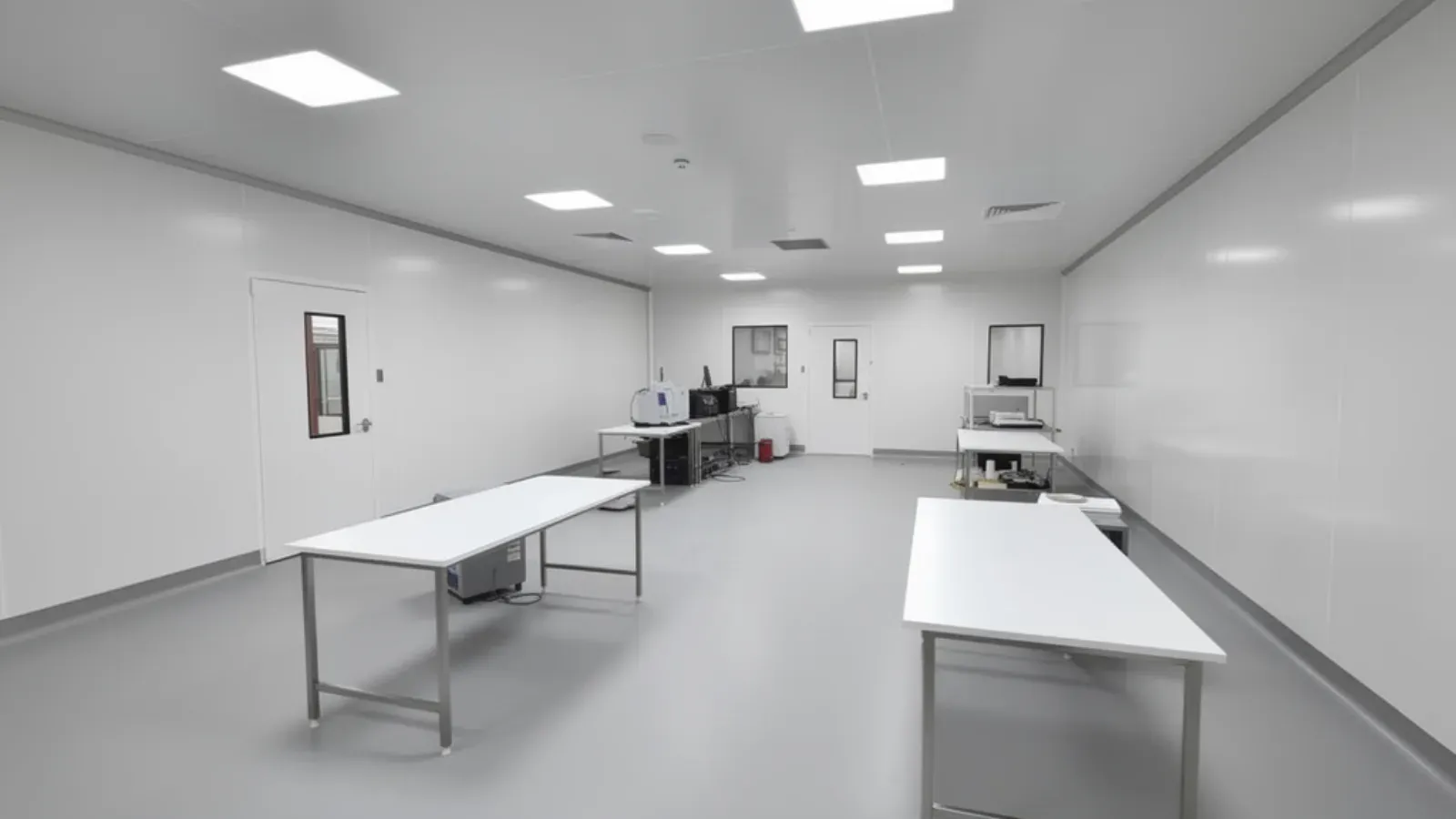
Lab & Cleanroom Buildout
Turning a shell into working lab space is not office drywall with a different paint color. We frame with backing for benches and hoods, put impact- and moisture-tolerant board where the environment demands it, finish to Level 5 flatness under coatings, and install gasketed, washable wall systems for controlled-environment rooms, sequenced to the equipment already on order.
-
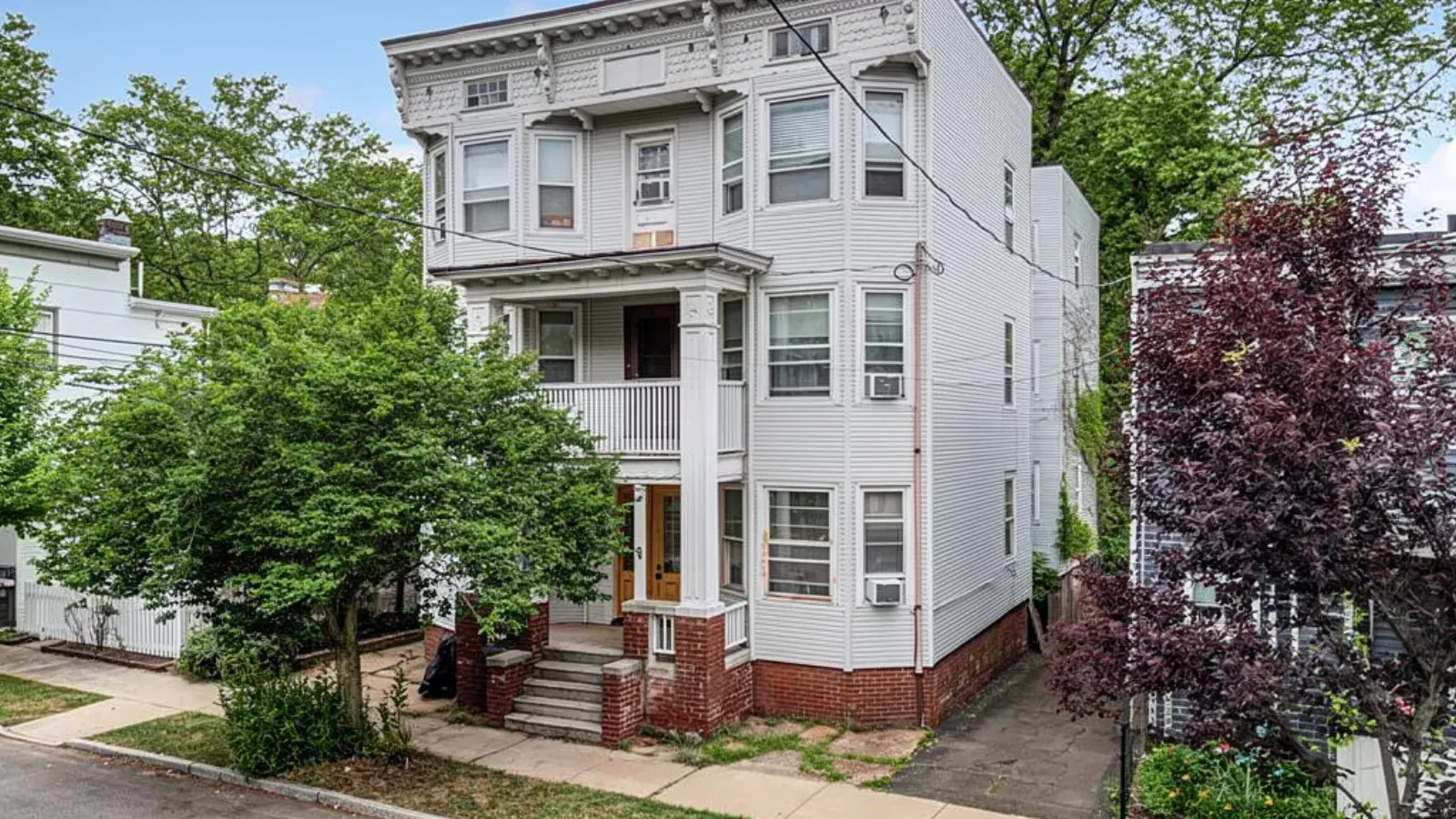
Multi-Family & Landlord Drywall
Every day a turned unit sits empty is lost rent, and the drywall is almost always on the critical path to re-listing. We do reliable, repeatable patch-hang-finish across unit after unit, scheduled to your re-list date, not ours. In Fair Haven and the Hill triple-deckers we match textured walls, break the wet-bathroom repair cycle with moisture-resistant board, and cut noise complaints between units.
What commercial drywall takes in Greater New Haven
New Haven's commercial work runs through its hospitals, its biotech corridor, its downtown office and mixed-use stock, and a dense multi-family market, and each one asks something of a drywall sub that a residential job never does. This is what separates a commercial sub here from a general contractor's handyman.
New Haven’s commercial work runs through its hospitals, its biotech corridor, its downtown office and mixed-use stock, and a dense multi-family market, and each one asks something of a drywall sub that a residential job never does. This is what separates a commercial sub here from a general contractor’s handyman.
What a commercial sub does that a residential contractor does not
Commercial work lives and dies on the schedule and the paperwork. A drywall sub on a tenant fit-out sits on the critical path between framing and the finish trades, which means an unreliable one costs a GC far more than the bid difference. The job means itemized sub bids and take-offs a GC can build a schedule against, framing and cover inspections sequenced with the New Haven Building Department at 200 Orange Street so cover-up never gets ahead of sign-off, and the documentation the authority having jurisdiction needs for a certificate of occupancy. It means a CT registration, a COI on request, and bonding where the project requires it, plus the credentialing a healthcare facility expects before a sub sets foot on an occupied floor. Cold-formed steel framing (ClarkDietrich, MarinoWARE) to AISI standards, deflection track at tall walls, in-wall backing set before board, and finishing to the GA-216 level the spec calls for are the baseline, not the differentiator. AWCI and AGC Connecticut practice is the floor.
Fire-rated assemblies and the code that drives them
Fire ratings are the most misunderstood line item in commercial and multi-family construction, and that misunderstanding is the opportunity. A rating is a tested assembly, not a product: a UL-listed detail that specifies the board type (Type X or Type C), the number of layers, the stud gauge and spacing, the fastener schedule, and the joint treatment. The CT State Building Code and the IBC require rated demising walls, corridors, shafts, stair enclosures, and occupancy separations (IBC Sections 707, 708, 709, and 713), and every one has to match its listing or it fails. The rating is only continuous if the firestopping is: every pipe, duct, conduit, and joint through a rated wall needs the correct listed firestop system, which is the step that most often fails inspection because it is invisible once the wall is closed. We build to the listing and detail the penetrations, then hand off the UL references and firestop documentation for the record.
The settings that make New Haven a commercial drywall market
The work concentrates where the city’s economy does. The medical district around Yale New Haven Health (the York Street and Saint Raphael campuses), the 300 George Street tower, and the Temple Medical practices generate a constant flow of clinical renovation that runs under an Infection Control Risk Assessment: hard containment, an anteroom, and negative air with HEPA filtration so construction dust never reaches a patient, with abuse-resistant, mold-resistant, and lead-lined board specified per the drawings. The College Street life-science towers (101 and 100 College Street) and the Science Park corridor pull biotech tenants who need tight-tolerance, cleanable, high-flatness wall assemblies coordinated around the densest MEP of any interior build. Downtown and the inner-ring suburbs out through Hamden, North Haven, and the shoreline carry the office and mixed-use fit-outs. And the city’s renter-majority multi-family stock, the triple-deckers of Fair Haven, the Hill, and Newhallville, turns over on a June 1 and September 1 lease calendar that rewards a sub who can repeat a clean turnover at volume.
Finish levels and where each belongs
Not every commercial wall gets the same finish, and knowing where each applies is part of the spec literacy a GC is buying. Level 4 to GA-216 is standard for most painted commercial walls. Level 5, a full-surface skim, goes where critical lighting, high-sheen paint, or a coated lab finish would otherwise telegraph every seam and fastener. Clinical wet walls and lab wash-down areas get moisture-tolerant board; corridors and equipment runs that take cart and gurney impact get abuse- and impact-resistant board rated to ASTM C1629; imaging rooms get lead-lined gypsum to the physicist’s report. Reading the wall-type schedule and putting the right assembly in each room, rather than hanging standard gypsum everywhere, is the difference between a commercial interior that holds up and one that is getting patched within a year.
Frequently asked questions
Do you work as a subcontractor on a GC's schedule and pull your own inspections? +
Yes. We provide itemized sub bids and take-offs, coordinate framing, firestop, and cover inspections with the New Haven Building Department (or the relevant town for shoreline and suburban work), and sequence around the MEP and low-voltage trades so we do not hold up the finish work. We are set up for the GC roster: CT-registered, COI on request, bonded where required.
Can you build fire-rated assemblies to the UL listing and document them for the inspector? +
Yes. A fire rating is a tested assembly, so we build to the published UL listing for each wall on the rating schedule (board type, layers, fasteners), firestop every penetration with the correct listed system, and hand off the UL references and firestop documentation the authority having jurisdiction needs for the certificate of occupancy.
Can you work in an occupied building without shutting it down? +
Yes. For healthcare we build the ICRA containment the facility's assessment requires (hard barriers, anteroom, negative air with HEPA) and phase the work after hours so the clinical area keeps running. For offices, retail, and occupied multi-family we sequence and schedule around operations the same way, segment by segment.
Are you licensed, insured, and bonded for commercial work in Connecticut? +
Yes. We carry CT contractor registration and commercial general liability, provide a COI on request, and bond where the project requires it. We are set up to satisfy GC roster and healthcare facility credentialing requirements.
Who pulls the permit on a commercial fit-out? +
Typically the GC or the prime holds the building permit and we work under it as the drywall sub, coordinating our framing, firestop, and cover inspections with the New Haven Building Department at 200 Orange Street. On smaller direct-to-owner scopes we sort the permitting path with you up front.
Do you handle the specialty assemblies, or just standard partitions? +
Both. The base scope is metal stud framing and commercial drywall, and the specialty assemblies (fire-rated, abuse-resistant, lead-lined imaging, cleanroom-adjacent, Level 5) are layered onto that same framing run where the wall-type schedule calls for them, so the whole interior comes from one crew rather than being split and re-coordinated.
Have a commercial project in New Haven?
Call and walk us through the scope. We work on the GC's schedule.
Call (203) 987-4891