New Haven Drywall logo New Haven Drywall

Drywall Services in New Haven, CT

Residential and commercial drywall — each entry links to a full breakdown of cost, process, and what to expect.

Drywall Repair & Patching

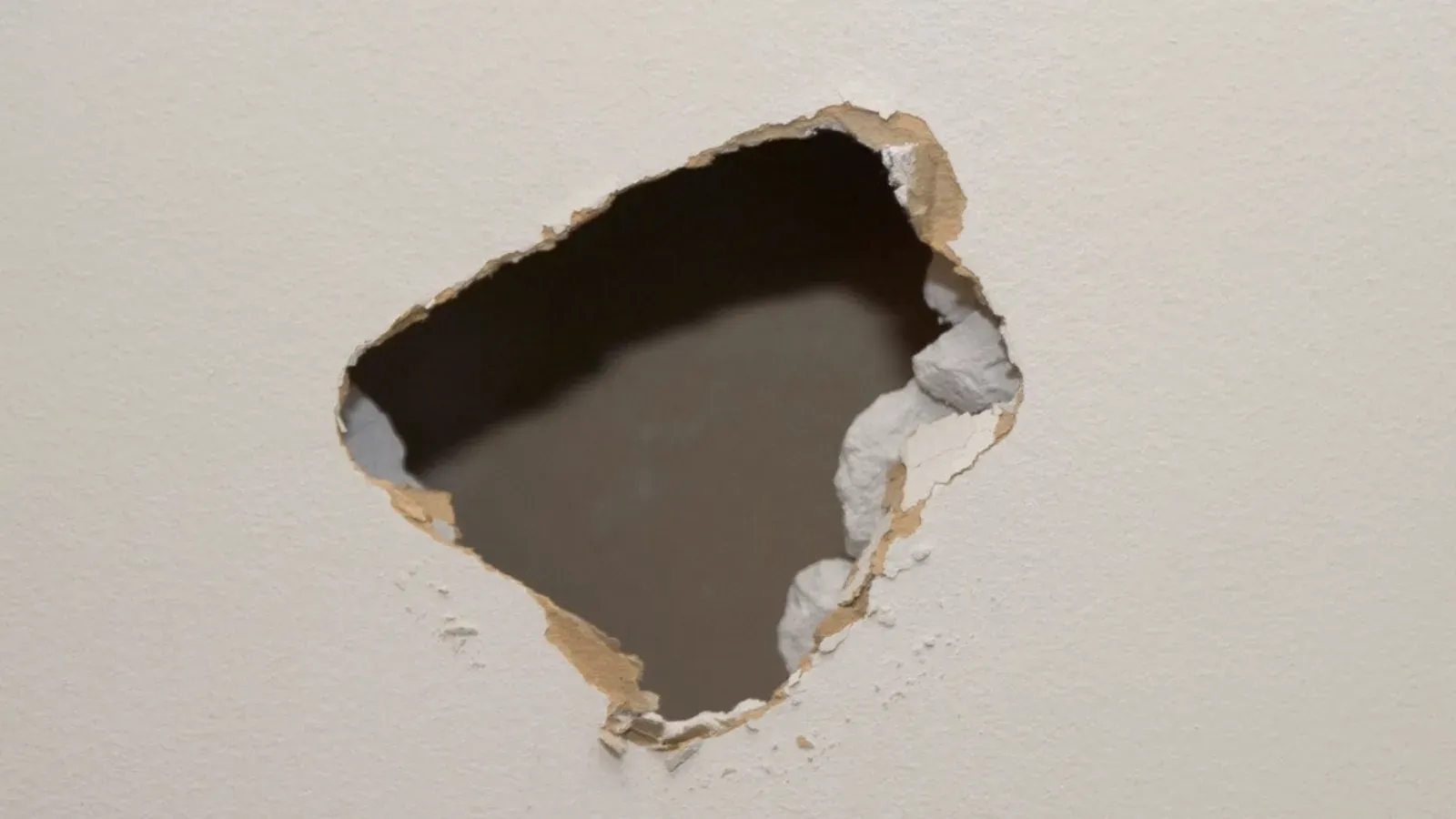
Drywall repair and patching is the small-scale version of everything good drywall finishing does, and the craft is entirely in making the patch invisible. Holes from doorknobs and furniture, the anchor holes and torn paper left after taking down shelves or a TV, nail pops and screw pops bulging through the paint, dented and crushed corners, small cracks: individually these are minor, and most people let a few accumulate before calling. The thing that separates a professional patch from a DIY one is not the filling, it is everything after. The patch method has to suit the size of the hole, a mesh-and-mud fix for a small one, a backed drywall plug for a larger one, so it will not crack or telegraph later. The seams have to be taped and feathered wide enough that they vanish. The texture has to be matched to the surrounding wall, because a smooth patch on a textured wall shouts "patched" as loudly as the hole did. And the whole thing has to be primed so it will not flash under paint. Bundling several repairs into one visit is the sensible way to clear a backlog before a repaint, a move, or a listing, and for landlords cycling units and sellers prepping for market that same craft scales into turnover and pre-sale work. It is high-frequency work that most homeowners across New Haven need at some point, and doing it so the wall looks like nothing ever happened is the entire point. Whatever the scale, the standard is the same: the right patch, the texture matched, the surface primed, and a wall you cannot find the repair on.
Make the damage disappear

Water Damage Drywall Repair

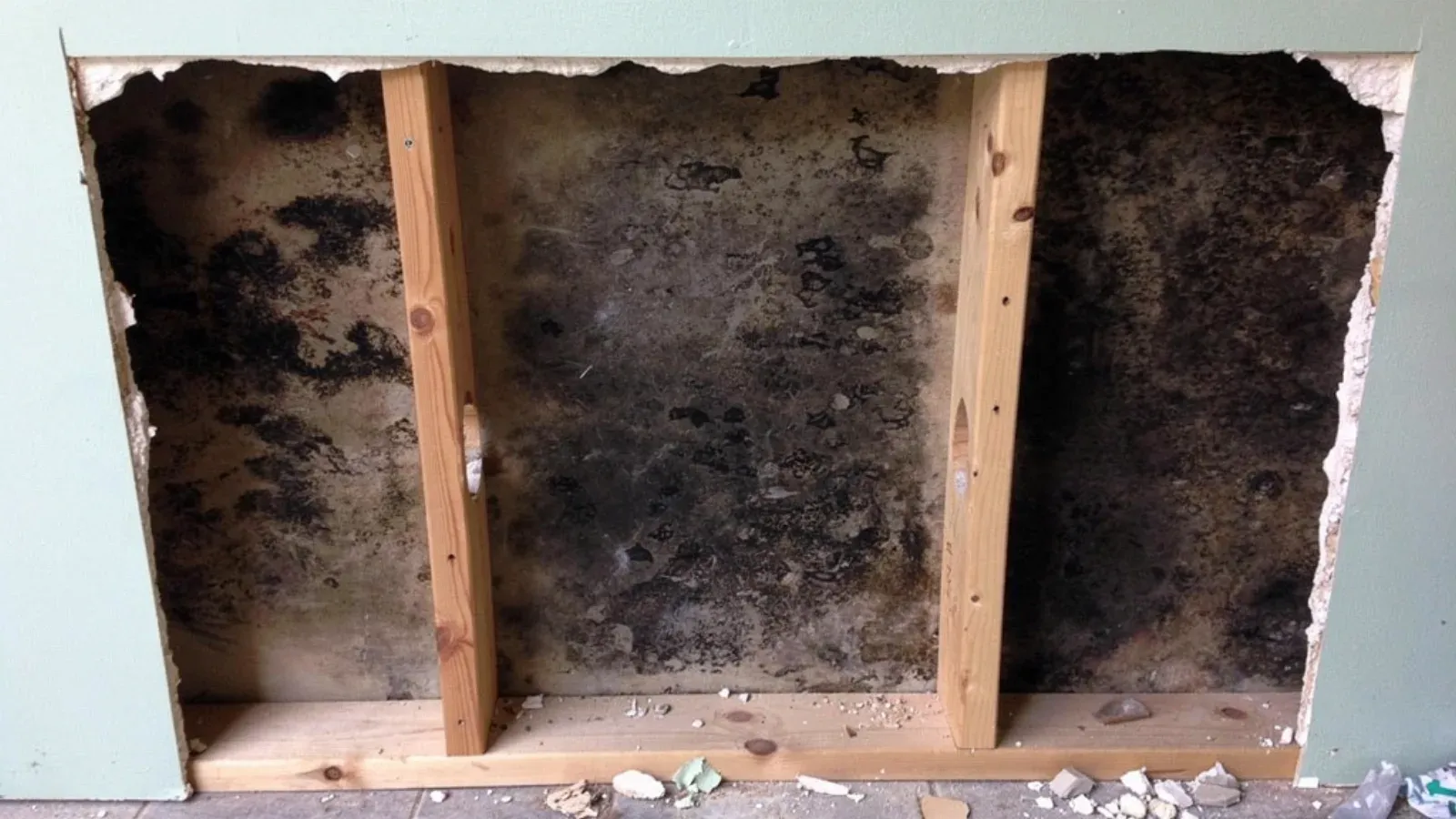
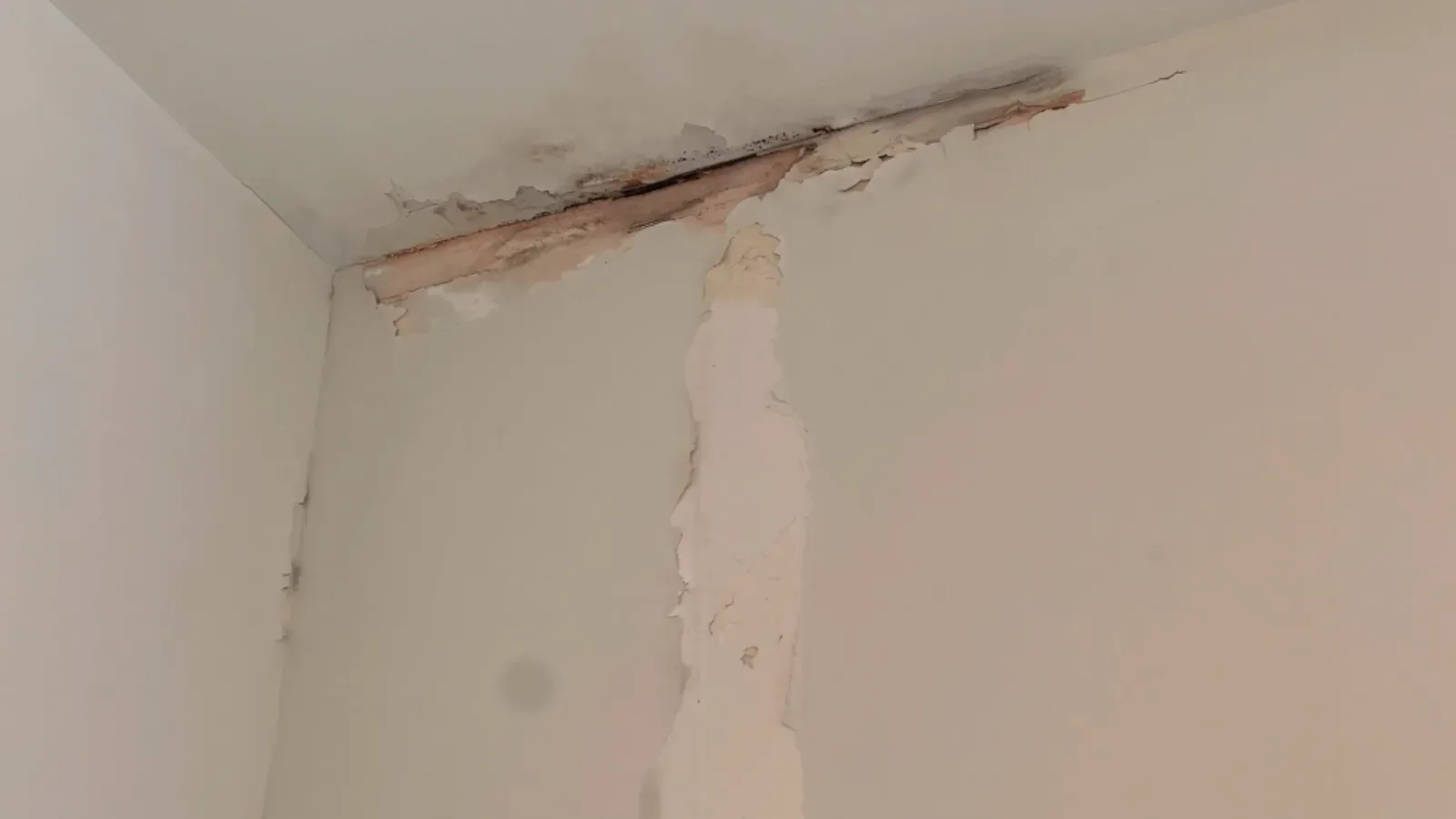
Water damage is the one drywall problem where painting over it is not just cosmetic shortcutting, it actively hides a failure that gets worse. When water gets into drywall, the gypsum's paper face wicks and holds it, and board left wet loses its integrity and grows mold in the cavity where you cannot see it. So proper water-damage repair is not a stain-sealing job, it is a removal-and-rebuild: taking out the board that absorbed moisture, assessing the framing and insulation behind it for mold or structural compromise, and reinstalling new board, moisture-resistant where the conditions or the history call for it, then finishing and texture-matching so the repair disappears. The judgment that matters most up front is whether board can dry in place or has to come out, and whether there is mold behind it, because closing a wall over either one just buys the same repair again with a bigger scope. A lot of New Haven water damage comes with paperwork attached, and we handle that side too. For homeowners running an insurance claim, we provide itemized scope documentation in the format Connecticut adjusters expect and can be on-site when they inspect. For landlords and triple-decker owners dealing with a unit-above leak, we coordinate access and document the scope to support a building or HOA claim. For sellers, CT property disclosure rules mean a documented, properly executed repair is worth more at closing than a painted-over stain an inspector will flag. This work spikes after coastal storms along the Branford and Guilford shoreline and after burst pipes across the older housing stock, and in every case the finish is the same standard: board removed, cavity verified, new board reinstalled, finished to Level 4, texture matched, primed, and handed off paint-ready with documentation for the file.

Repair it, don't mask it

Drywall Crack Repair

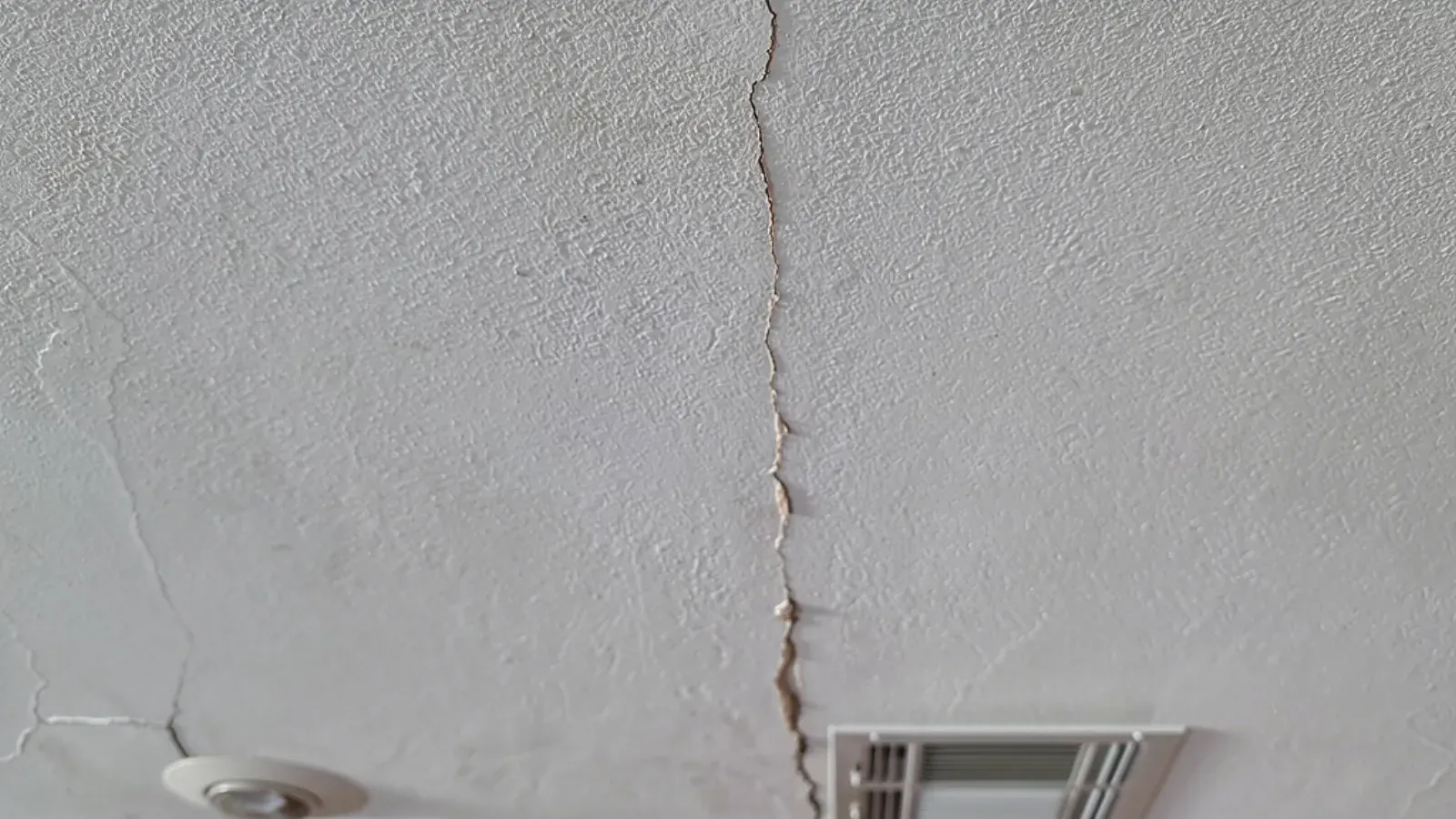
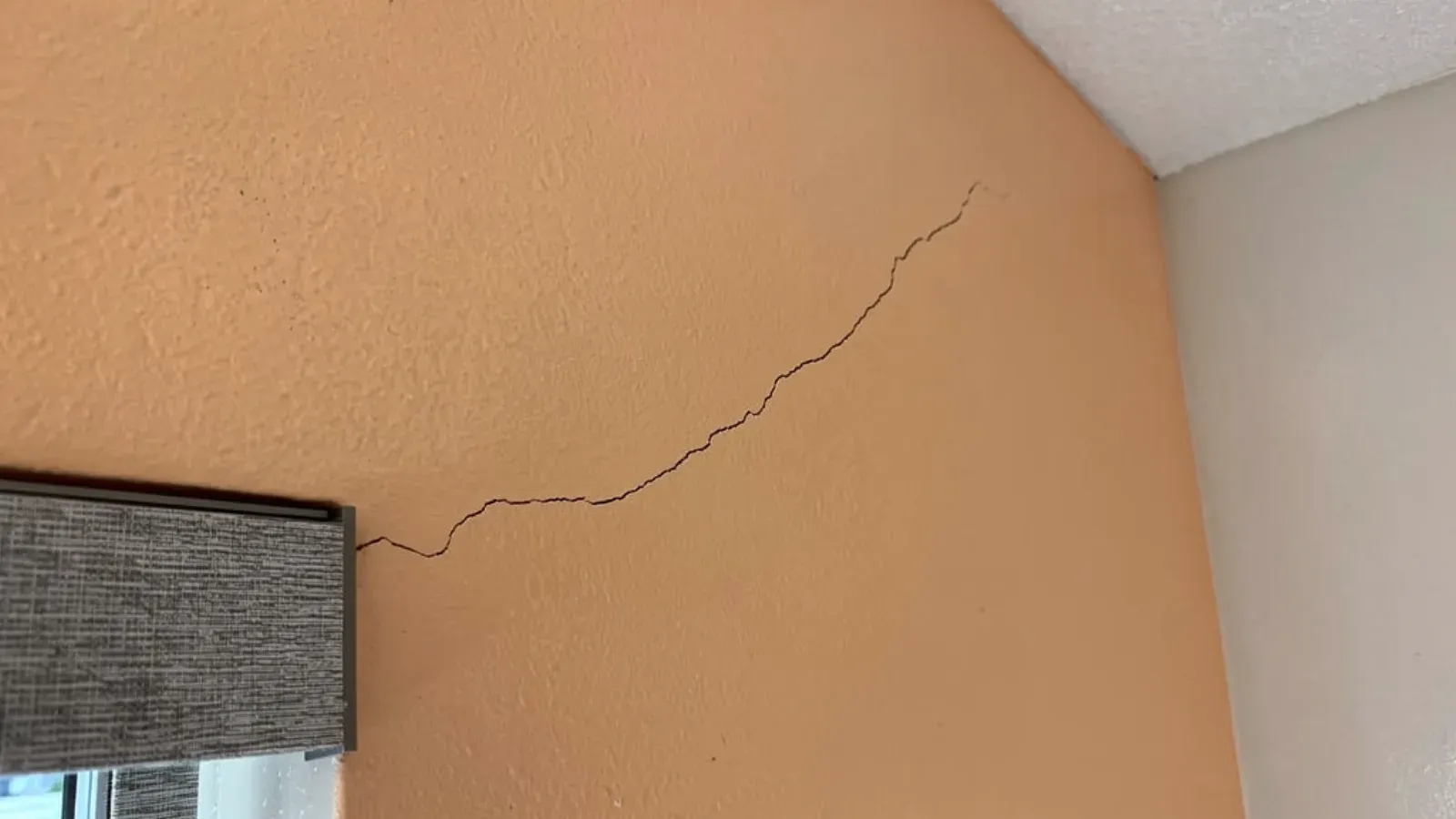
A drywall crack is almost never just a cosmetic gap to fill, and that is why the ones people give up on keep coming back. Fill a crack without addressing why it opened and it telegraphs right back through the next coat of paint, usually in the same spot, season after season. So the work starts with reading what the crack actually is. Cracks radiating from the corners of doors and windows are stress cracks at the building's weak points; long straight cracks along a ceiling or wall seam are usually failed tape; a crack that widens with the seasons is riding normal seasonal movement. The overwhelming majority are cosmetic movement cracks, a straightforward fix done right. The rare exception is a crack that signals a structural problem, and flagging that honestly rather than papering over it is part of the job. For the common cases, the fix depends on the crack: cutting it out and re-taping the joint properly, re-securing or replacing failed corner bead, or using flexible and setting-type materials at joints that will keep moving. Then the rest is finish work, thin coats feathered into the surrounding wall, texture matched so the repair does not read as a smooth stripe, and a primer coat so it will not flash under paint. In New Haven's older homes, recurring cracks are often a plaster-specific problem, keys letting go from the lath, which is a different fix on our plaster page. We cannot promise a hundred-year-old colonial in East Rock will never move again, but we can make the repair resilient to the movement that is actually there, so you stop repainting the same line every year.

Stop the recurring cracks

Ceiling Repair

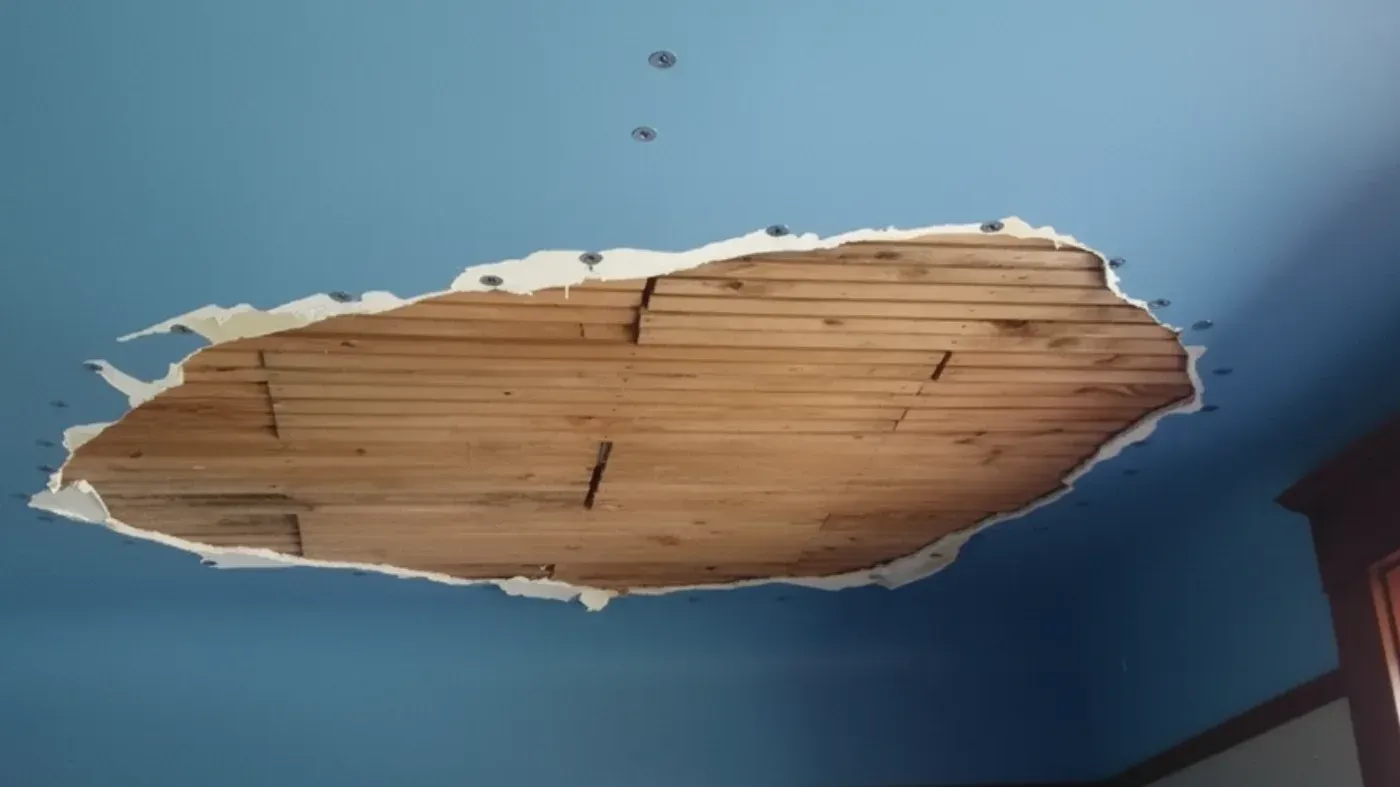
Ceilings are the most punishing surface in the house to repair, and the reason is light. A ceiling catches raking light from windows and fixtures that exposes every ripple, seam, and mismatched texture a wall would forgive, so a ceiling repair has to be genuinely good to disappear. It is also why good ceiling repair starts with diagnosis, not mud. A brown ring is the most common ceiling call, and painting straight over it is the most common mistake: water stains bleed back through ordinary paint within days, so they have to be sealed with a stain-blocking primer first. But the real question is whether the board behind the stain is still sound. If the ceiling got truly wet, the gypsum's paper face is compromised and the section needs replacing, with a mold check behind it, not just sealing. A sagging ceiling is a different order of problem. It is holding weight it was never meant to, water, board pulled from the joists, or in New Haven's older homes plaster that has lost its keys to the lath, and it can fail suddenly, so it is a stay-out-from-under-it issue until it is assessed. We find the cause and handle it accordingly rather than skinning a fresh coat over it. And plenty of ceiling repairs are genuinely cosmetic, a crack at the wall-ceiling joint, a hole from a removed fixture, a failed prior patch, where the whole craft is in the finish: feathered flatter than a wall would need, texture matched, and primed so it does not flash. Because so many ceiling problems trace to a leak, mold, or plaster, this is the general ceiling entry that routes to the right specific fix by cause. Whatever the case, the result is a ceiling that reads as one uniform surface instead of a map of everything that has happened to it.

Get your ceiling assessed

Mold-Related Drywall Removal & Replacement

Mold-related drywall work is really two problems that have to be handled in the right order: the mold and moisture, and the wall. Get the sequence wrong, rebuild before the source and the contamination are dealt with, and the mold simply comes back behind your new board. So the work starts with the cause. For limited surface growth on otherwise sound board, removal and replacement with moisture and mold-resistant board can be straightforward. Where contamination is significant, the sequence matters and the roles are distinct: a CT-licensed mold remediation contractor contains the area, treats and removes contaminated material, and passes an air-quality clearance test, and then we rebuild with new drywall finished to match. We are clear about that boundary, we do the drywall removal and the rebuild, we coordinate the remediation, but we do not perform remediation itself, and a contractor who blurs that line is one to be wary of. What we bring is a rebuild that does not reintroduce the problem: mold-resistant board where the conditions call for it, in the damp basements and the chronically humid bathrooms and the shoreline homes where this comes up most, finished to Level 4, texture matched, and primed paint-ready. There is a paperwork dimension that matters in Connecticut, where mold is a disclosure issue. Owners selling a home have to report it, so a documented, properly executed repair, with remediation clearance where applicable, is what actually satisfies a buyer, an inspector, and the disclosure form. For a landlord resolving a tenant complaint or a turnover, that same paper trail protects you. The point of doing it this way is simple: the wall comes out clean, the source gets addressed, and the mold does not come back.

Remove it at the source

Drywall Installation & Hanging

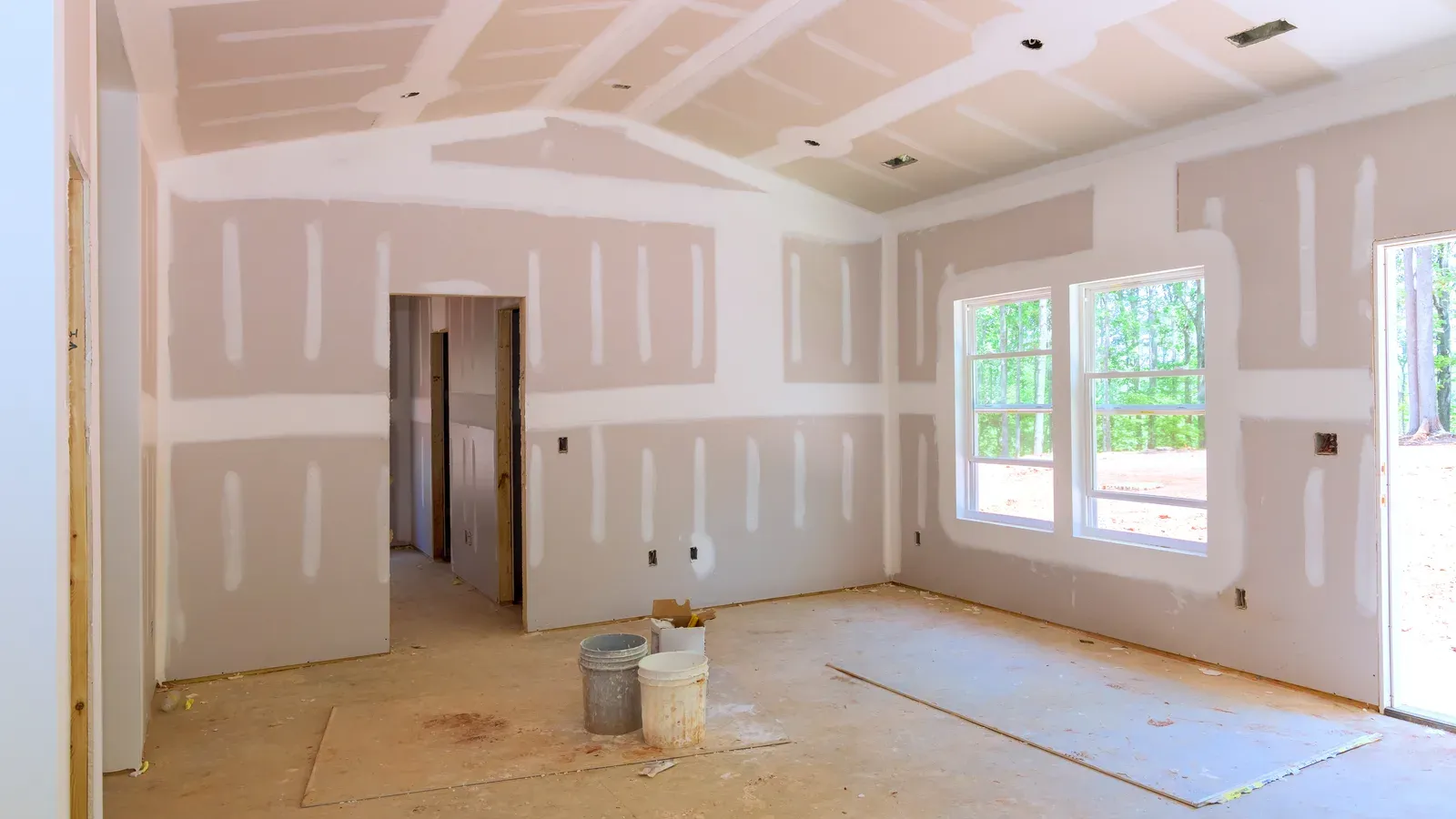
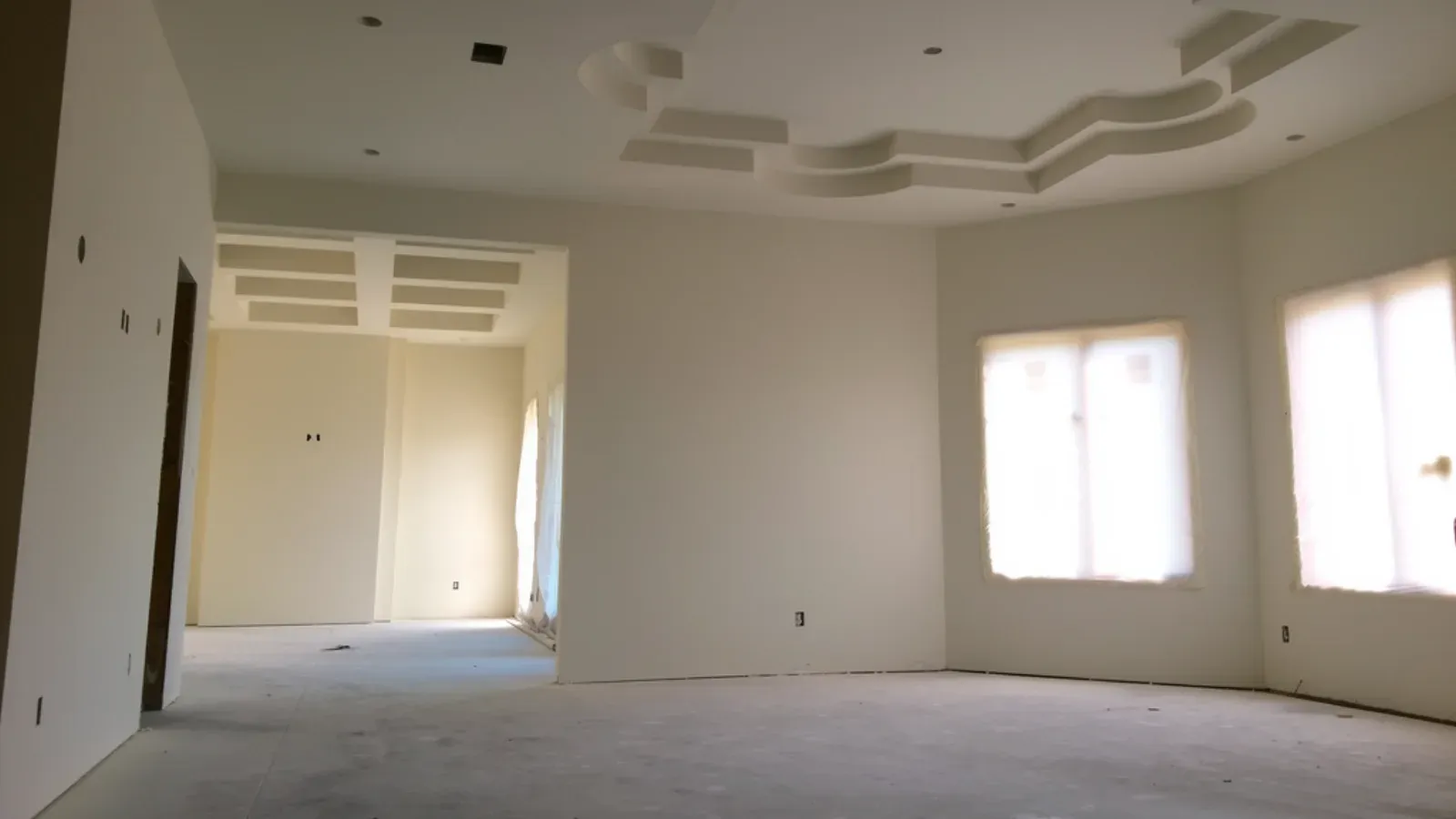
Drywall installation is the stage where a framed, insulated space finally starts to read like a finished room, and how well it goes is decided as much by the hanging as by the finishing. Good hanging is half of a good finish: seam placement that keeps joints off the high-traffic and high-light areas, tight joints, correct fastening, and backing set where later trades and fixtures will need it all determine how clean the finished walls can be. Before any of that comes board selection, which most people never think about but which matters in every room, standard board where it is dry, moisture-resistant board in baths and below grade, fire-rated Type X where a code assembly requires it, mold-resistant board where conditions warrant. Put the wrong board in a wet or rated location and the wall is compromised no matter how good the finish looks. The work runs from a single new room to a whole-house gut, and it includes the code-driven assemblies, the fire separations, that a space requires. A new room is also a relay of trades, and the drywall crew sits right in the middle of it. We sequence after framing, insulation, and the mechanical, electrical, and plumbing rough-ins, and after their inspections where required, so nothing gets buried that an inspector still needs to see, and we set the backing the later trades depend on before we close the walls. Where new walls meet existing ones, common in New Haven's additions and conversions, we blend the transition and match the texture so the new work reads like it was always part of the house. Then we finish to Level 4, or Level 5 where the lighting demands it, prime, and hand off clean to paint, trim, and flooring. The whole point is to be the dependable middle of the project, not the place it stalls.

Build out your space

Drywall Taping & Finishing

Taping and finishing is the craft that determines whether painted walls look flat and seamless or reveal every joint and fastener underneath, and it is where patience separates a professional from a rushed job. The work is straightforward to describe and hard to do consistently: embedding tape in the seams, covering fasteners and inside and outside corners, building up joint compound in successive coats, and sanding to the specified finish level. What makes it good is discipline, multiple thin coats with real dry time between them, feathered wide so the seams disappear into the surrounding board rather than sitting proud of it, and a final surface checked under light. The finish level is matched to the project against the GA-216 standard: Level 4 is the common standard for most painted walls, while Level 5, a full skim of the entire surface, is reserved for the most demanding lighting and high-sheen paint, and knowing which a job needs is part of the service. There are two buyers for this. Builders and general contractors need a reliable finishing sub for new construction who shows up, holds the schedule, and delivers a consistent finish across a whole house, the repeat-relationship work that keeps a project moving. And homeowners who hung drywall themselves, or had it hung, need a pro to tape and finish it properly so the DIY effort does not show in the paint. The final test of a finish is not how it looks straight on, it is how it looks when light rakes across it, so we check the surface under raking light before calling it done, touch out anything that would flash, and leave it prime-ready. Done right, the painted wall reads as one flat plane and you would never know there were a dozen seams and a hundred screws underneath. That is the entire job: make all the work disappear.

Get a seamless finish

Drywall Removal & Demolition

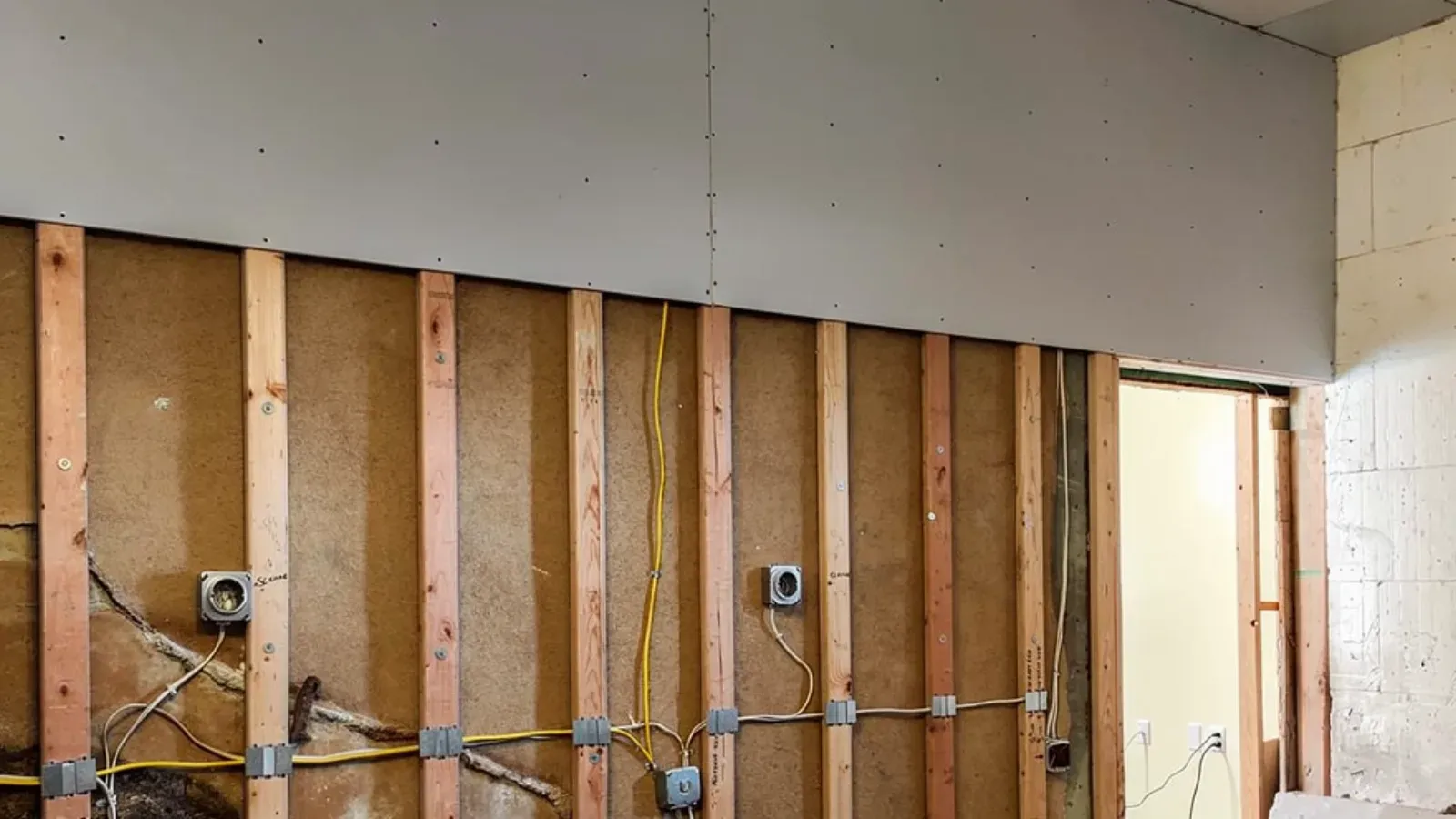
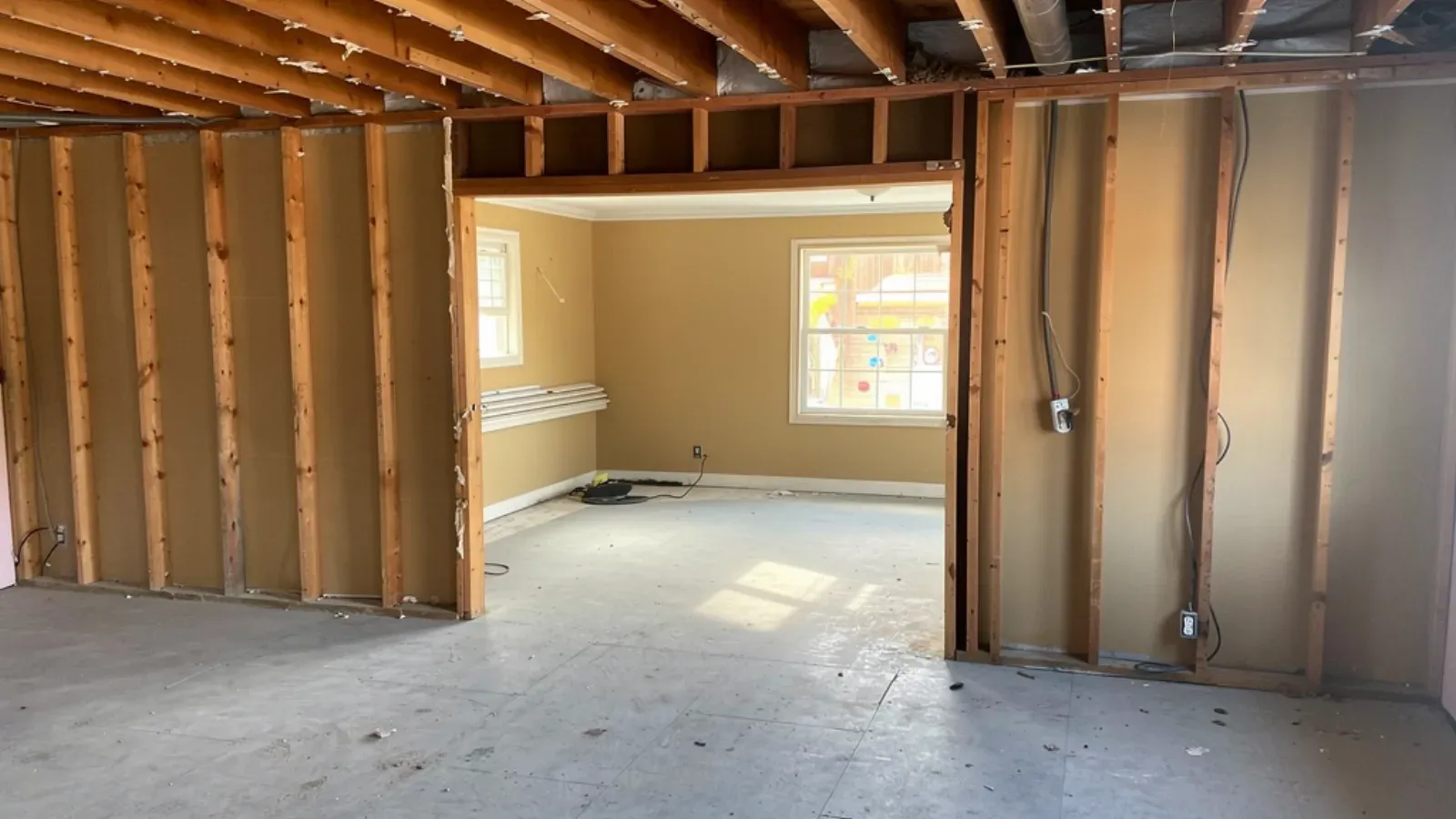
Drywall removal looks like the simplest part of a project, and it is the part where cutting corners does the most hidden damage. Done right, it is controlled tear-out, not demolition for its own sake: containing the work area so dust does not migrate through the house, protecting floors and adjacent surfaces that are staying, removing the board and fasteners cleanly, identifying and working around what is behind the wall, wiring, plumbing, and rated assemblies, and hauling the debris away so you are not left living around a pile of broken gypsum. It covers both selective demolition, opening specific walls or sections for a layout change, new wiring, or plumbing, and full strip-to-studs gut work ahead of a renovation. The single most important thing a removal crew does, though, is recognize when tearing into a wall might disturb hazardous material. Asbestos turns up in old joint compound and sprayed textures, and lead paint is standard in pre-1978 homes, both common in New Haven's older housing stock. The right response is to stop, test, and route to the correct licensed specialist rather than ripping in blind and contaminating the house, and keeping that boundary clear, we contain and coordinate, we do not abate, is part of doing it responsibly. The job is not done when the wall is down; it is done when the debris is gone and the space is ready for the next phase. For a lot of projects that next phase is us, and demo-and-rebuild as one job on one schedule keeps it simple, the crew that opened the wall is the one that closes it back up. Whether it is a single wall or a whole-house gut, the standard is the same: check for hazards, contain the mess, protect what stays, and leave a clean, sound starting point.

Start the demo clean

Skim Coat & Level 5 Finish

Skim coating is how you get a wall that looks finished rather than merely painted. It means applying a thin, continuous layer of joint compound across an entire surface, not just the seams and fasteners, to erase imperfections that paint will not hide: old texture you want gone, patch marks, wallpaper damage, and general surface wear. A Level 5 finish is the top of the GA-216 scale, a full skim over the whole surface so the wall reflects light evenly with no flashing, and it exists for a specific reason. Standard Level 4 finishing, taping and coating only the joints and fastener heads, is perfectly good under most paint and lighting. But under high-sheen paint, dramatic or raking light, or large unbroken walls near big windows, Level 4 can telegraph every seam and screw line, and no amount of good paint fixes it. That is where Level 5 earns its cost, and being honest about which one your project actually needs is part of the service, not everyone needs to pay for Level 5. A great smooth finish is built in thin layers, never one thick pass. We protect and contain the room, prep the surface, stabilizing plaster, repairing torn paper, knocking down failing patches, then apply the first skim across the full surface, sand it, and add thin coats as the finish level requires, sanding between each. The last step before paint is inspecting under raking light to catch anything that would flash, then priming, often with a high-build primer-surfacer for Level 5 so the topcoat lays down dead even. This is premium-finish work that concentrates in the shoreline and higher-end suburbs, Guilford, Woodbridge, Orange, and it is a natural next step after plaster stabilization or popcorn removal. The whole point is that the wall reads smooth under the light it will actually live in, not just smooth on paper.

Get a flawless finish

Plaster Repair & Plaster-to-Drywall Conversion

Plaster repair in an old home comes down to one decision made honestly, wall by wall: save the original plaster, or replace it with drywall. New Haven's older neighborhoods, the Victorians and Colonial Revivals of East Rock, the homes around Wooster Square and in Westville, are built with plaster troweled over thin wood lath, and it fails in a specific way. Over decades it loses its keys, the little plugs that lock it to the lath, so it cracks along stress lines, bulges away from the wall, and sags on ceilings. The mistake a general drywall crew makes is treating that like a drywall patch, cutting out a section and filling it flat and dead next to the surrounding wall. Sound plaster is worth saving: it can be re-secured with plaster washers, its cracks filled and reinforced so they do not telegraph back, and the surface re-skimmed to the hard, flat finish these houses are known for. Plaster that is too far gone gets converted, that wall or ceiling removed and replaced with drywall, then finished to blend with the original surfaces around it. The right answer depends on how much of the plaster has lost its grip, and a contractor who actually works on old houses can tell the difference standing in the room. There is a health dimension too: the paint on pre-1978 plaster almost always contains lead, so we follow lead-safe RRP practices as a matter of course, contain the dust, and protect the home. Crack repair and stabilization are far cleaner than full removal, and most repairs let you stay in the house. What you are buying, whether it is a single recurring crack in an East Rock colonial or a full conversion in a renovation, is a finish that respects the house instead of fighting it.

Get an honest plaster read

Popcorn Ceiling Removal

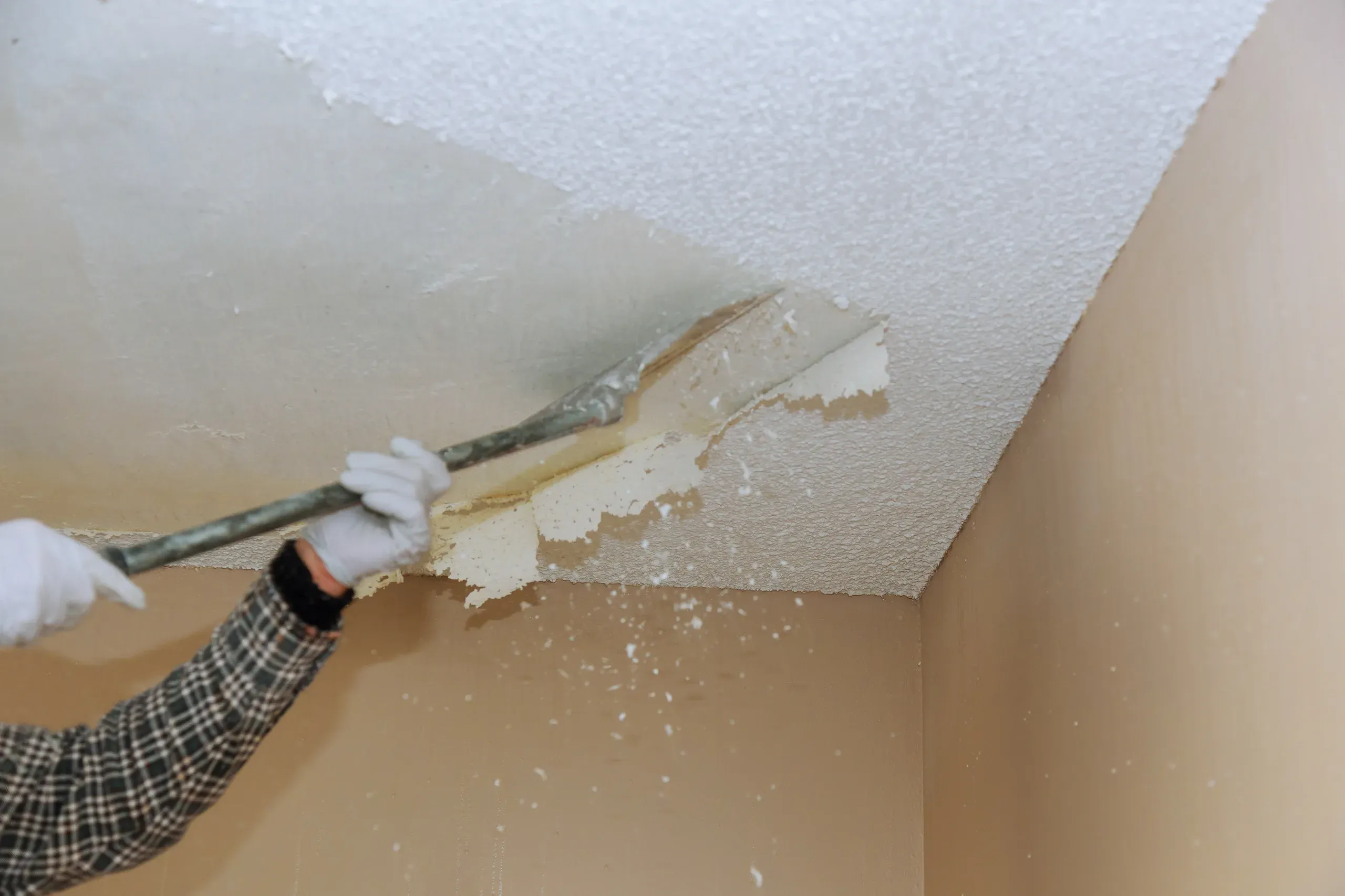
Removing a popcorn ceiling is one of the highest-impact single changes you can make to a room, and also one where the difference between a good job and a regrettable one is almost entirely in the parts you cannot see afterward. The visible payoff is real: a smooth ceiling reflects more light, photographs better, and modernizes a space more than most renovations twice its cost, which is why it is such a strong move before a sale and such a satisfying one if you are staying. But the process is where the care lives. For any home built before 1979, the job begins with asbestos testing, because the original sprayed "acoustic" texture can contain asbestos, and disturbing it without testing is a genuine health mistake. If the test is positive, abatement is handled by a licensed abatement contractor before any refinishing, we do not scrape it. Once the texture is off, or safely abated, the ceiling rarely comes off perfectly flat: there are usually old stains, prior patches, seam lines, and minor damage that the texture was conveniently hiding. Those get repaired, then the ceiling is skim-coated, sanded, and finished flat, and primed paint-ready. A ceiling gets more raking light than any wall, so the finish has to be genuinely flat or it will flash, which is why skim-and-sand rather than a quick scrape is the standard. This is common work across Hamden's and Orange's postwar capes and ranches and throughout New Haven's older neighborhoods, and it pairs naturally with a pre-listing refresh. What separates a clean result from a regret is simple: whether it was tested, whether the mess was contained, and whether what the texture was hiding got fixed before the smooth finish went on.

Update your ceilings smooth

Drywall Texture Matching

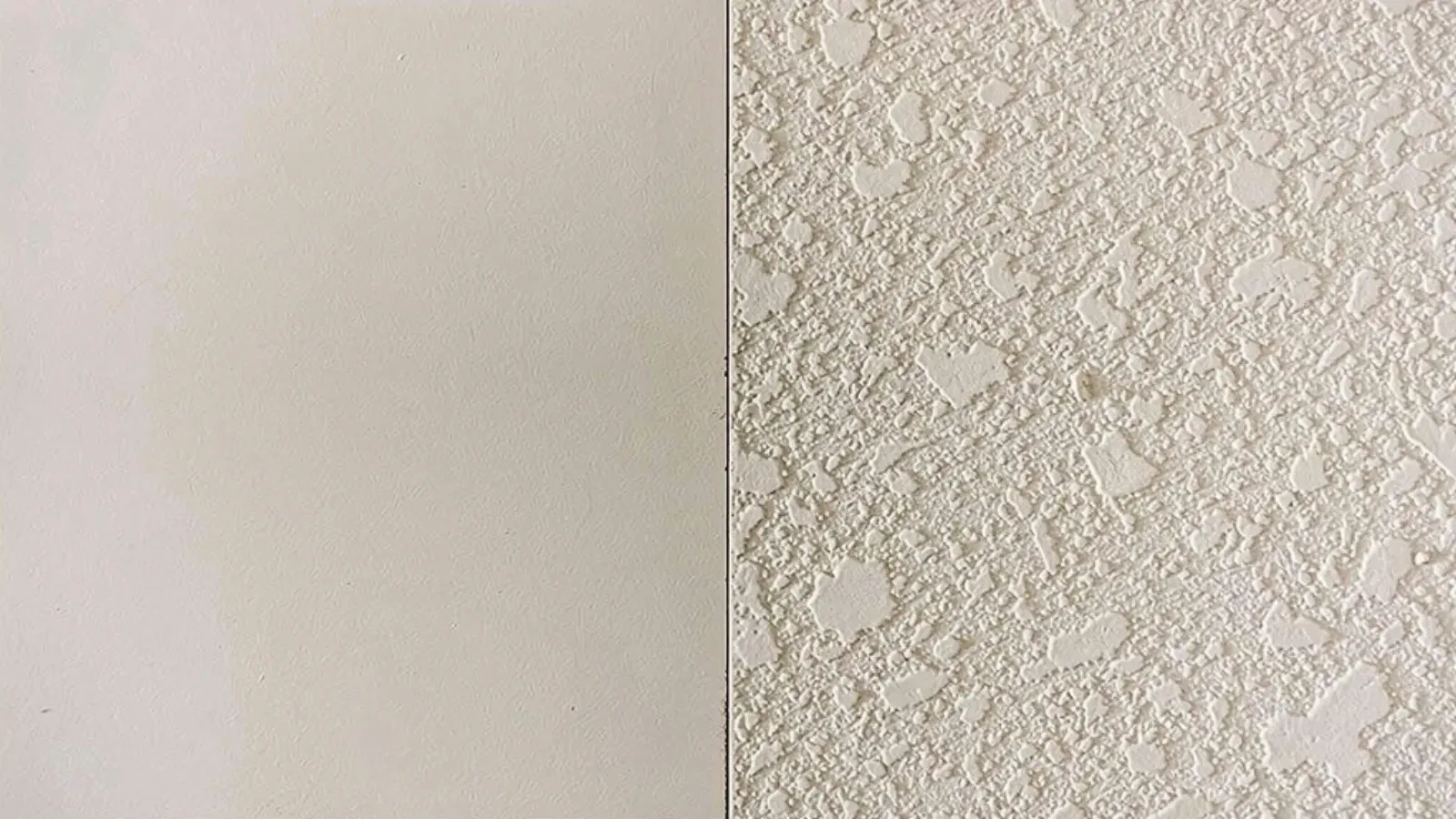
Texture matching is the step that decides whether a repair disappears or announces itself. You can patch a hole perfectly, hang a new section flawlessly, or reinstall after water damage cleanly, and still end up with a repair everyone notices, because the texture does not match the wall around it. Matching it is part analysis and part execution. The analysis is reading exactly what the existing texture is and how it was applied, which is less obvious than it sounds. There are the common machine textures, orange peel, knockdown, and splatter, each with its own spray equipment, mix consistency, and knockdown timing, and there are hand-applied textures like skip trowel and other hand-troweled finishes that come down to tools and technique. Get the type right but the consistency or the pressure wrong and it still reads as a patch. The execution is disciplined: testing the match on a sample board or an inconspicuous area and adjusting until it is right before touching the actual repair, never improvising directly on the wall. Most of the time texture matching is the quiet final move of a repair, a water-damage reinstall, or a remodel where new work meets old, the part that turns a sound repair into an invisible one. But it is also a standalone fix for a common, maddening situation: a previous patch, DIY or by another contractor, that did not match and now stands out more than the original damage would have. Either way the measure of success is simple and unforgiving. Stand in the room, let the light rake across the surface, and you should not be able to find where the work was done. That is the whole job.

Blend the repair in

Basement Drywall Finishing

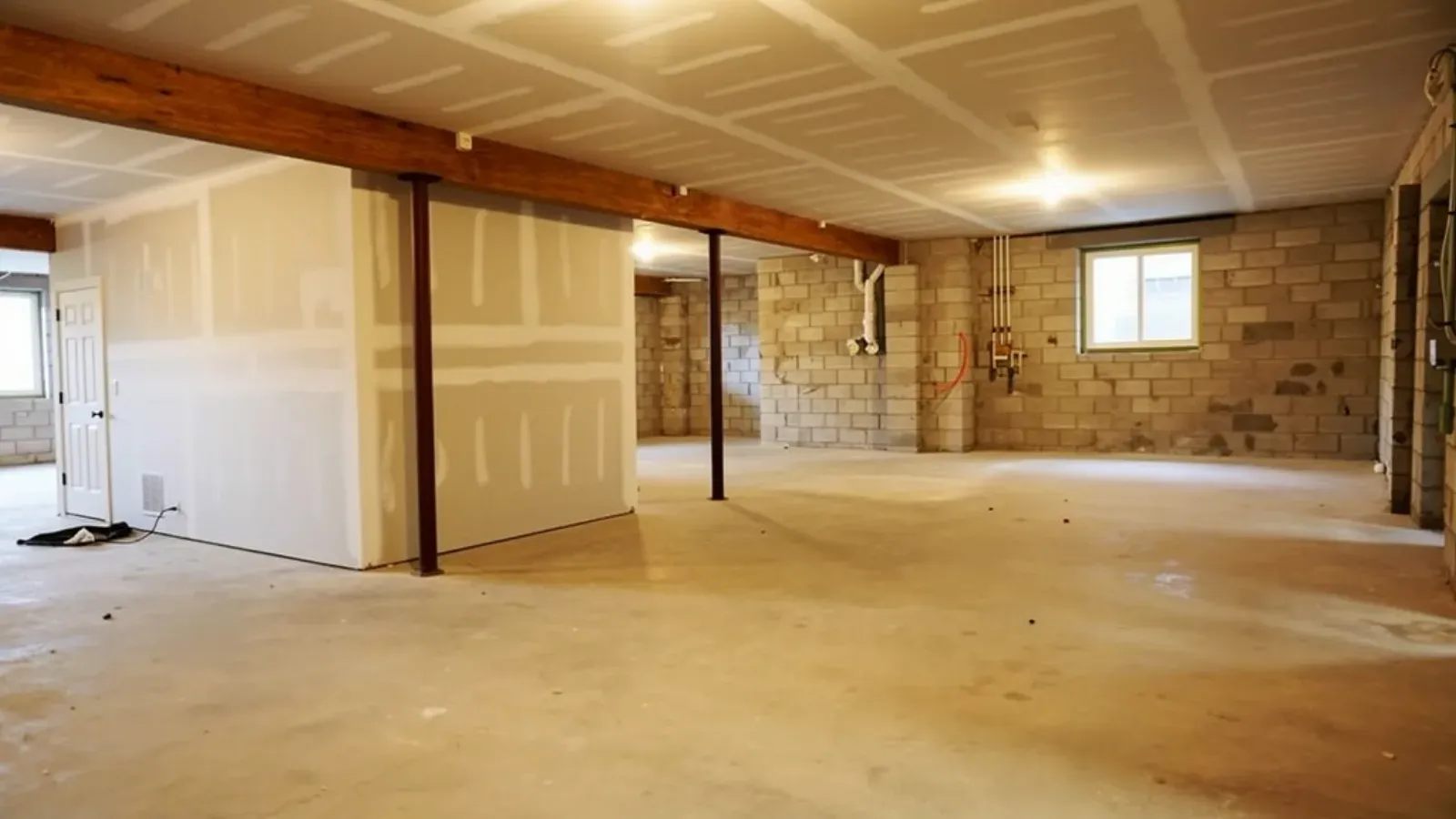
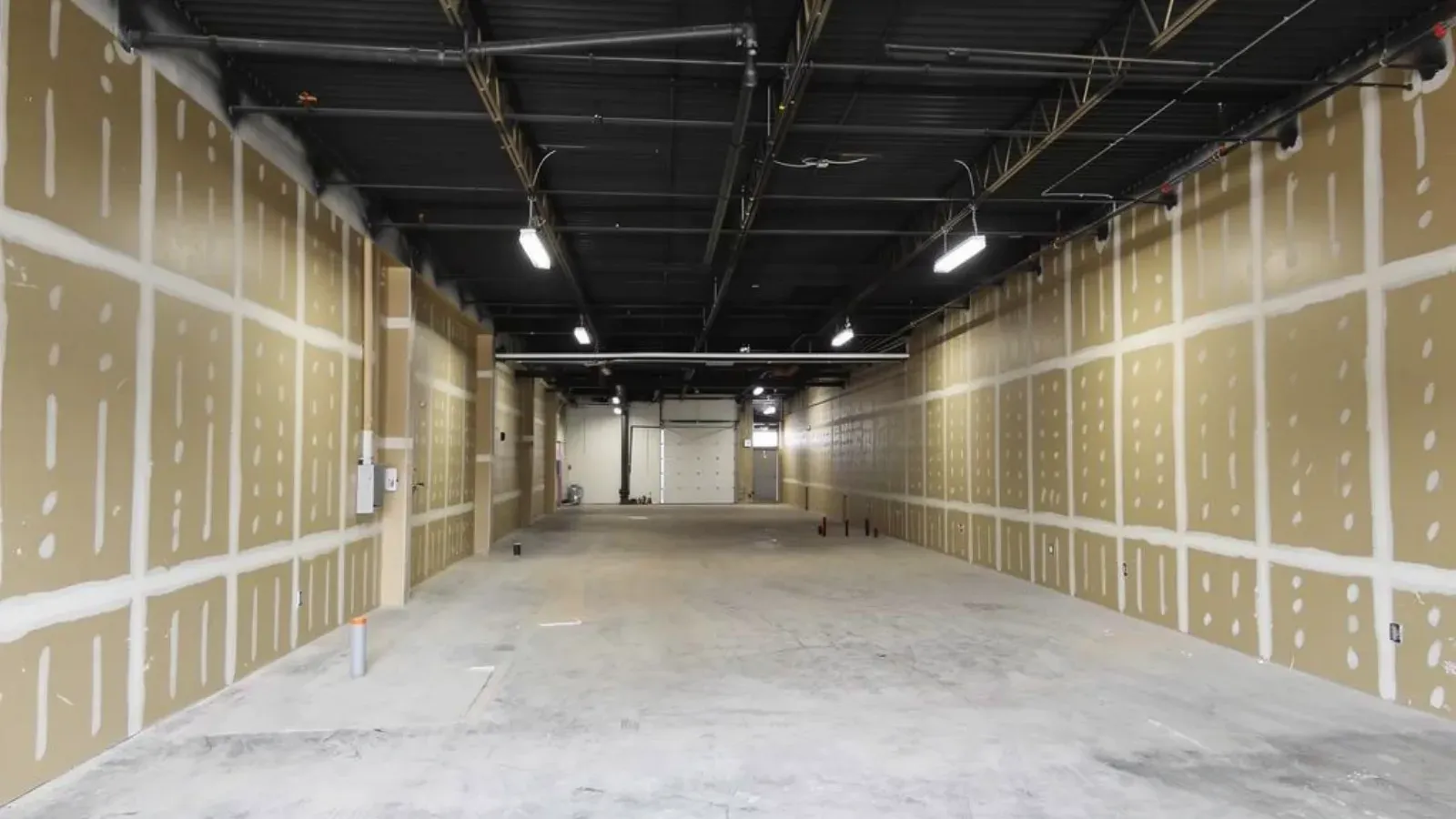
Turning a basement into living space is the highest-value drywall project most homeowners take on, and the one where the details below the surface matter most. The visible part is simple enough: hang board over the framed and insulated walls and ceiling, tape it, and finish it paint-ready. What separates finished living space from a "finished basement" is everything around that. It means moisture-resistant board where a below-grade wall calls for it, because the ground holds water and finishing over damp traps it behind your new walls. It means boxing ductwork and steel beams into clean drywall soffits instead of leaving them exposed. And it means making the ceiling decision deliberately: a hard drywall ceiling looks seamless and reads like the rest of the house, while a suspended grid costs less and keeps plumbing valves and wiring accessible, which genuinely matters down there. Plenty of basements land on drywall with access panels only where they are needed. Where the room is going to be a media space, a home office, or a gym, the walls and ceiling that need sound isolation get the right assembly built in from the start rather than bolted on later. And because a finished basement is a permitted, code-driven project in Connecticut, the fire separation at the furnace and any attached garage has to stay intact, not just be boarded over. This is work that concentrates in the suburbs and shoreline towns where homes have dry, usable lower levels, Hamden, North Haven, Woodbridge, Orange. The result you are paying for is easy to describe and hard to fake: you walk down the stairs and still feel like you are in the house.

Finish your basement right

Soundproof Drywall

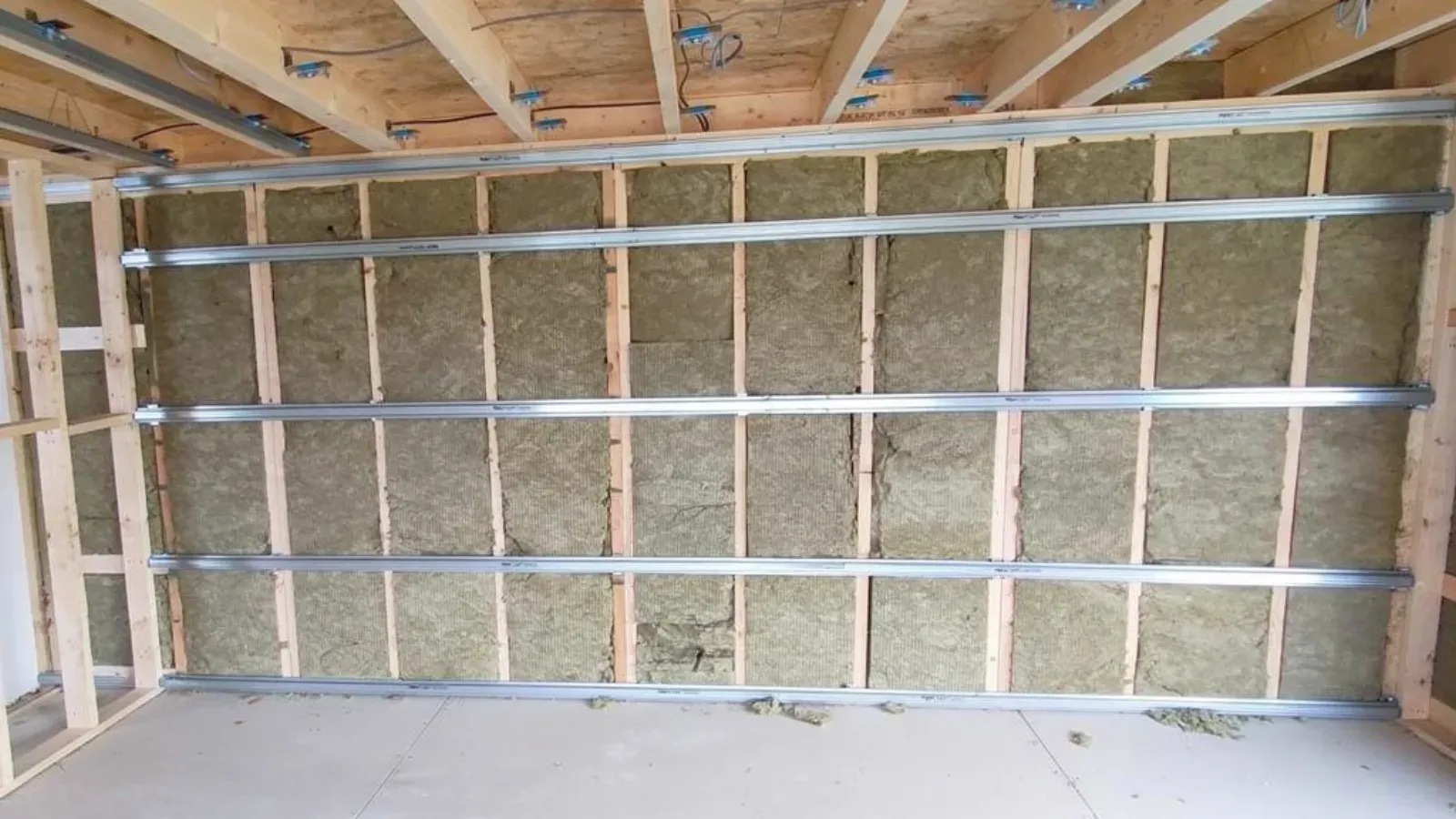
Soundproofing is the drywall service most often sold wrong, because it is sold as a product when it is really a system. Just screwing up a thicker board disappoints, which is why so many people think soundproofing does not work. Done as an assembly, it makes a real, audible difference. The system combines several things working together: sound-damping board like QuietRock, resilient channel or sound clips that decouple the drywall from the framing so vibration does not carry straight through, additional mass from extra layers, insulation in the cavity, and acoustic sealing at every edge and penetration where sound would otherwise leak. The target is a measurable improvement in the wall's STC, its Sound Transmission Class rating, and which combination you need depends on the kind of noise and the room. We set that expectation honestly up front: good soundproofing turns an intelligible conversation next door into a muffled murmur you stop noticing, but it rarely produces total silence, and anyone promising silence is overselling. So we pick an STC target for your room and budget and build only the assembly that goal actually needs, rather than gold-plating every wall. There are two buyers for this in Greater New Haven. For the work-from-home homeowner or the media-room owner, often in a Woodbridge basement build-out or a home office, it is a one-time investment in being able to use the space. For a landlord, especially in the triple-deckers and multi-family stock of the denser towns, soundproofing the worst party walls is a one-time cost weighed against repeated turnover and noise complaints, and we can target just the problem walls rather than the whole building. Either way the wall ends up looking like any other wall, finished, painted, and finally quiet.

Quiet the room down

Garage Drywall & Fire Separation

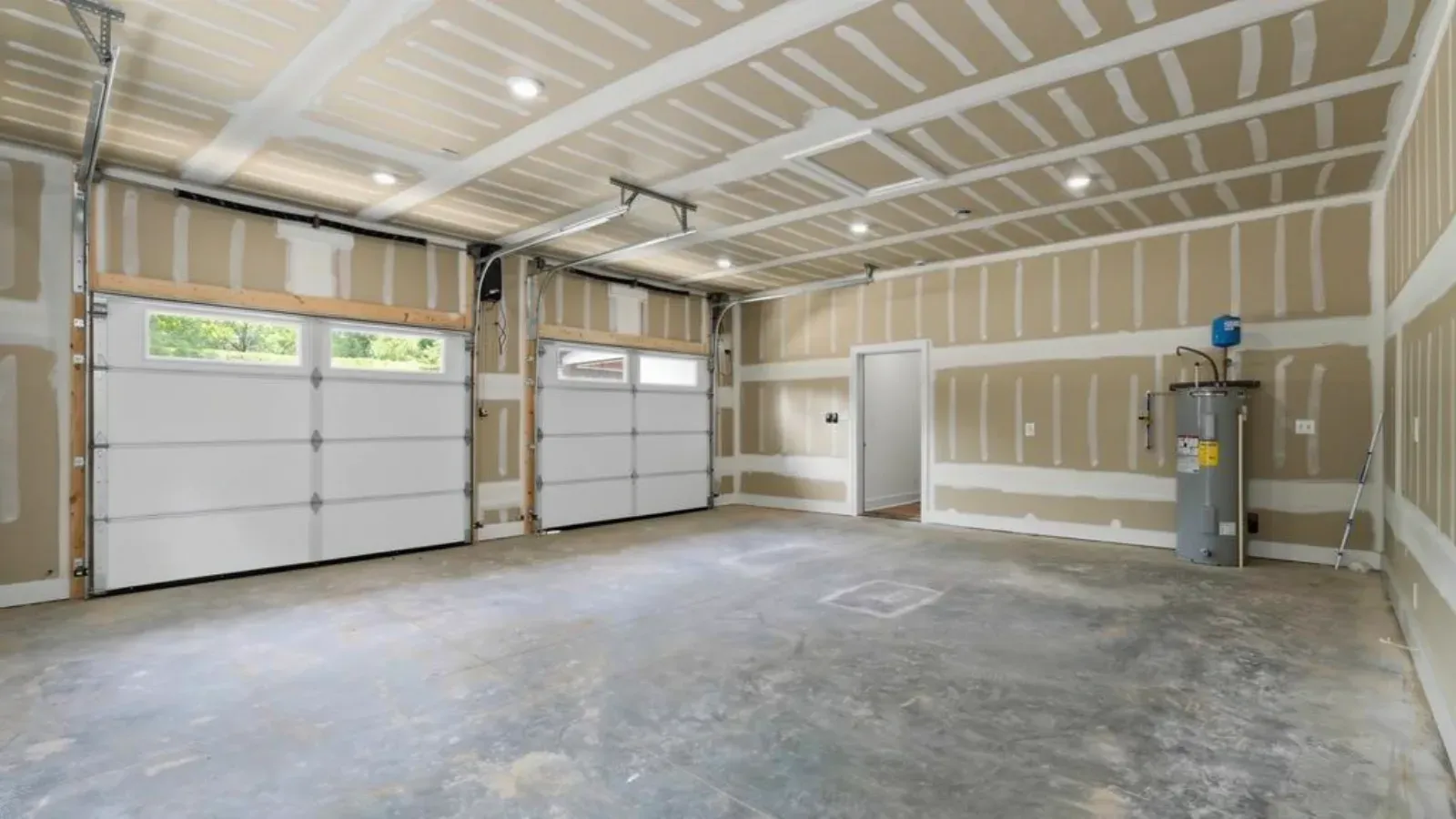
Garage drywall is the one place a homeowner runs into a code fire assembly without meaning to. The wall and ceiling an attached garage shares with the living space, and the ceiling under any living space above the garage, are a required fire separation, and that is what distinguishes this work from ordinary drywall: it is a code assembly, not just a wall surface. The right board is typically 5/8" Type X, installed to continuously cover the required surfaces, with proper treatment at the ceiling and any penetrations, so it forms an unbroken fire-resistant barrier. Most people meet this requirement in one of two ways. The common one is a pre-sale inspection: a home inspector flags a garage with bare studs, missing board, or an inadequate separation before a sale, and it has to be corrected to close. The other is a garage being finished or converted to living space. How far you take it is up to you. If you just need to satisfy the code, common for a seller clearing a flagged item, we install the rated board and fire-tape the seams to form a continuous, compliant barrier and leave it ready to pass. If you want a garage that actually looks finished, we take it further and finish smooth to a paint-ready Level 4. And if you are converting the garage into living space, the separation is one piece of a larger scope, insulation and a full finish, which we handle through our installation work. This is planned work across Greater New Haven's housing, and it often comes with an inspection deadline attached. Whatever the goal, the non-negotiable part is the same: a separation that is the right board, fully covering the required surfaces, and continuous enough to do what it is there for.

Pass the garage inspection

Fire-Rated Drywall Assemblies

Fire ratings are the most misunderstood line item in commercial and multi-family construction, and that misunderstanding is exactly where an experienced sub earns trust. A rating is not a product you buy, it is a tested assembly: a UL-listed detail that specifies the board type (Type X or Type C), the number of layers, the stud gauge and spacing, the fastener schedule, and the joint treatment. The CT State Building Code and the IBC require rated demising walls, corridors, shafts, stair enclosures, and occupancy separations, IBC Sections 707, 708, 709, and 713, and every one has to match its listing or it fails inspection. The rating is only continuous if the firestopping is continuous: every pipe, duct, conduit, and joint passing through a rated wall needs the correct listed firestop system. That is the step that most often fails, because it is invisible once the wall is closed, and it is the step a generalist skips. We build to the published listing for each wall on the rating schedule, detail every penetration with the right firestop system, and hand off the UL references and firestop documentation the authority having jurisdiction needs for the certificate of occupancy. The reason a rated-assembly sub earns a GC's trust, though, is schedule certainty. We sequence framing, firestop, and cover inspections with the New Haven Building Department, or the relevant town for shoreline and suburban projects, so cover-up never gets ahead of sign-off and the project does not stall waiting to reopen a wall. This is work for the multi-family and mixed-use projects around downtown and the medical district, and for any fit-out with rated partitions on the punch list. Whether it is new rated partitions in a fit-out, shaft walls in a multi-family building, or bringing an existing demising wall up to code, what the GC or owner is buying is an assembly that matches its listing and passes the first time.

Build it to the listing

Metal Stud Framing & Commercial Drywall

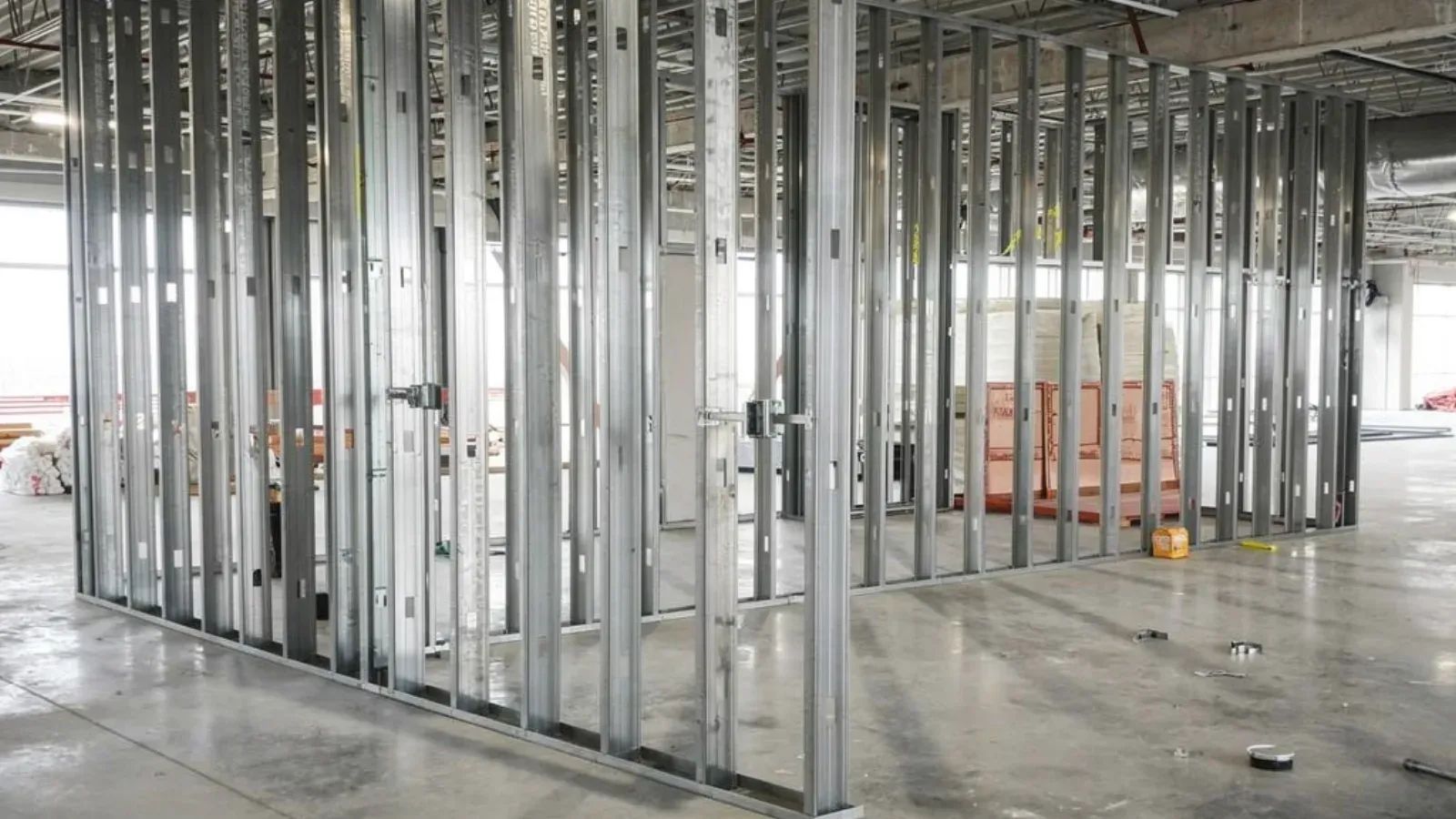
Metal stud framing and commercial drywall is the structural-interior layer of a commercial fit-out, and it is most of what determines whether the interior comes together on schedule. The scope is the backbone of the job: cold-formed steel stud partitions and demising walls, soffits and bulkheads, and drywall ceilings, laid out from the drawings, framed with the correct stud gauge and spacing, backed for casework and wall-mounted equipment, then boarded, taped, and finished to the specified GA-216 level. It is the base scope that the rated, abuse-resistant, clinical, and lab assemblies all build on, layered onto the same framing run wherever the wall-type schedule calls for them, and it is most of the linear footage in any office, retail, or mixed-use build-out. What a general contractor is actually buying, though, is reliability on the critical path. The drywall sub sits between framing and the finish trades, which means an unreliable one costs a GC far more than the bid difference, in blown schedules and re-coordination. We provide itemized sub bids and take-offs so there are no scope surprises a GC has to absorb, coordinate framing and cover inspections with the New Haven Building Department or the relevant town so cover-up never gets ahead of sign-off, and turn space over flat, clean, and paint-ready on schedule. We carry CT registration, provide a COI on request, and bond where the project requires it, and we are set up for the GC roster. This is the base commercial work across downtown New Haven, the College Street and Science Park corridor, and the commercial stretches of North Haven and the shoreline suburbs. For a GC building out tenant after tenant in this market, that predictability is the product, and it is why the specialty assemblies are worth having come from the same crew that frames the whole interior.

Frame your fit-out right

Lead-Lined Drywall (Radiation Shielding)

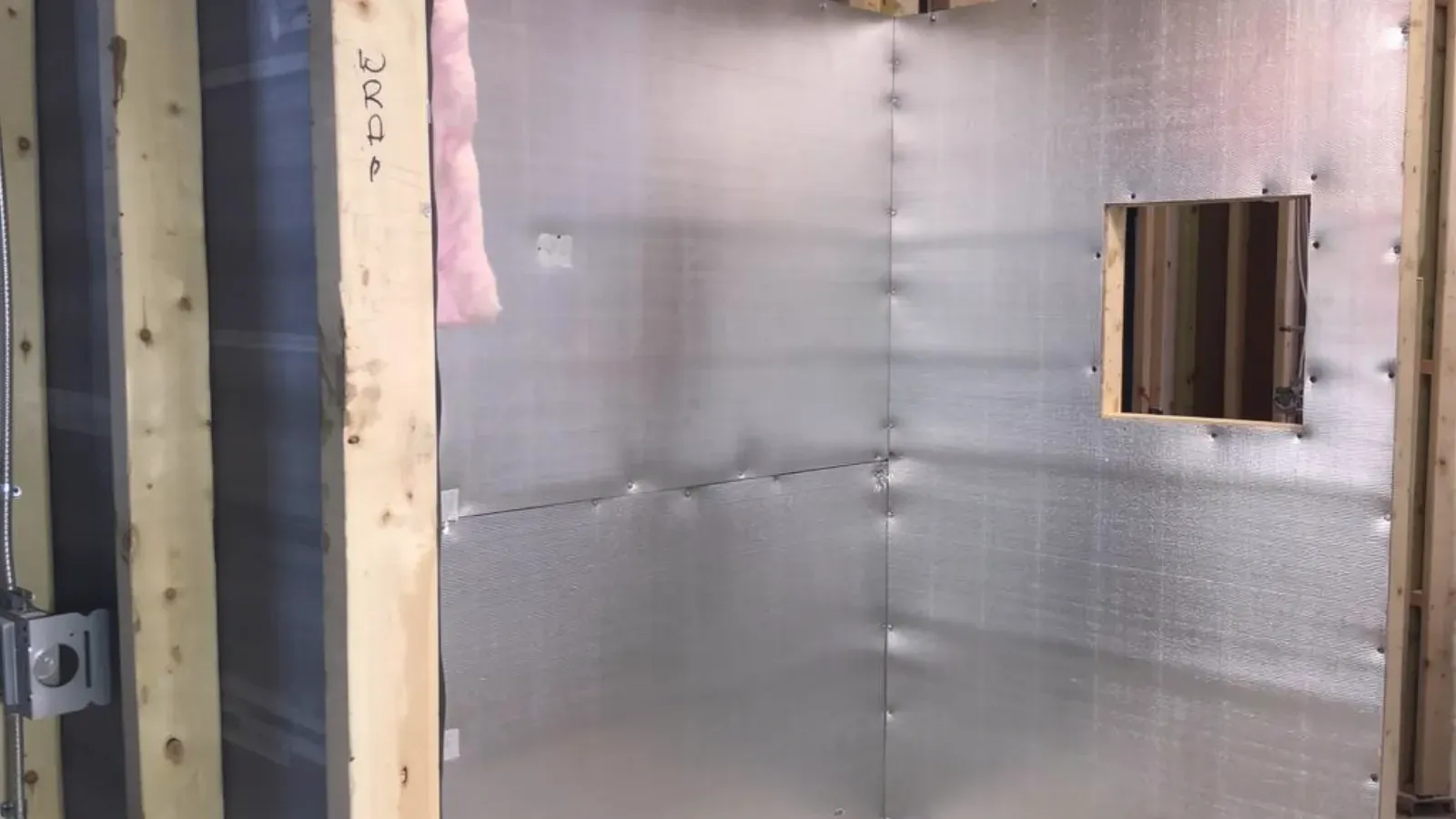
Lead-lined drywall looks like ordinary drywall and behaves like a precision shielding assembly, and that gap is the whole service. It is gypsum board factory-laminated with a sheet of lead, installed so the radiation shielding is continuous across an entire wall, including the places a general crew would never think about: the seams between sheets, the fastener heads, the outlet and switch boxes, the door frames, and any other penetration. Everything about the scope, the lead thickness, which walls require it, and the height it must reach, is specified in a radiation physicist's shielding report, which is the customer's prerequisite and the drawing we build to. The installer's entire job is to execute that report without leaving a single shielding gap, because a post-installation survey will find one, and a gap means opening a finished, painted room back up. Continuity detailing is what separates a capable installer from a generalist: lead backing behind seams, lead collars and putty at boxes and penetrations, and correct treatment at door and window openings and glass, so the shielding envelope is unbroken. Once it is done, the imaging room looks like any other room, taped, finished to Level 4, painted. The shielding lives inside the assembly. This is specialty work concentrated in New Haven's medical and dental market, from a single dental cone-beam room to a full CT suite with ceiling and floor shielding, and installer scarcity for it is real, which is why the lead here is capability, not price. What the practice and the GC are buying is a room that passes its shielding survey on the first try and lets the equipment be commissioned on schedule. We coordinate that survey with the practice's physicist and, in the rare case a deficiency turns up, remediate it promptly. Whatever the scope, the standard is the same: continuous shielding, verified.

Shielding that passes survey

Suspended / Drop Ceiling Installation

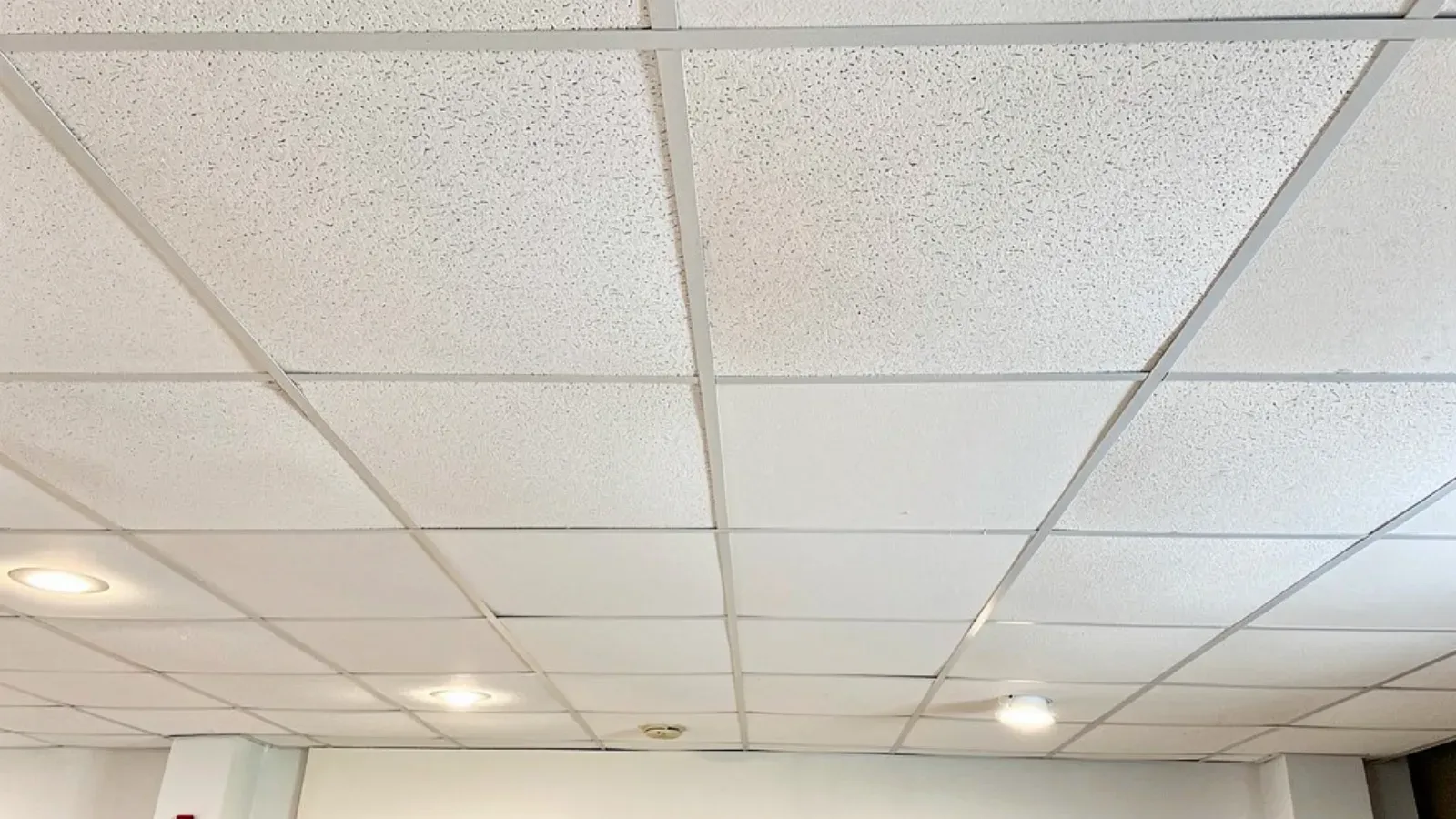
A suspended ceiling is the standard commercial ceiling wherever access to the space above matters and a hard drywall ceiling is not required, and it is doing more than most people notice. The grid conceals the mechanical, electrical, and plumbing runs, the ductwork, the wiring, the sprinkler lines, while keeping all of it reachable for service, and it carries the room's lighting and air distribution. Installing it well is a matter of layout and precision: laying the grid out to the room so the border tiles are balanced rather than a sliver on one side, hanging main runners and cross tees dead level and square off the structure above, and integrating light fixtures, diffusers, and sprinkler heads so they land where the reflected-ceiling plan calls for them. Then the tile is set clean. The work also covers repairing and replacing existing grid and tile, the water-stained, broken, or mismatched tiles that make an office or store look tired, or a sagging old grid that needs to come out. Because it is commercial work, schedule is part of the product. Suspended ceiling work fits cleanly into a tenant fit-out or a turnover, and it is well suited to after-hours and weekend scheduling so an occupied office, store, or practice does not lose a business day. It also bundles naturally with the rest of a commercial build-out, the metal-stud framing, partitions, and drywall, so the whole interior comes from one crew rather than being split across trades and re-coordinated. This is work across the office, retail, and medical space of downtown New Haven and the commercial corridors out through North Haven and Orange. What a landlord or tenant is buying is a ceiling that is level, square, integrated with the lighting and mechanicals, and finished on the schedule the space actually needs.

Refresh your commercial ceiling

Get a fast, no-pressure quote

Call or send a few details — we serve New Haven and the surrounding area.

Call (203) 987-4891

Call Now